Best Trailers for Construction Companies in UAE: What to Avoid for
A single wrong trailer choice can delay a construction project by days. Many UAE contractors discover this only after a flatbed fails to handle their excavator or a load shifts on the way to a Sharjah job site.
Choosing trailers for construction UAE projects involves more than picking the cheapest option. This guide explains what features matter, which mistakes cost companies the most money, and how to match trailer types to specific construction needs across Dubai, Sharjah, and Abu Dhabi.
What Construction Trailers Are and How They Work
Construction trailers are heavy duty units designed to carry equipment, materials, and machinery between sites. They connect to prime movers and must handle uneven loads, rough terrain, and frequent loading cycles.
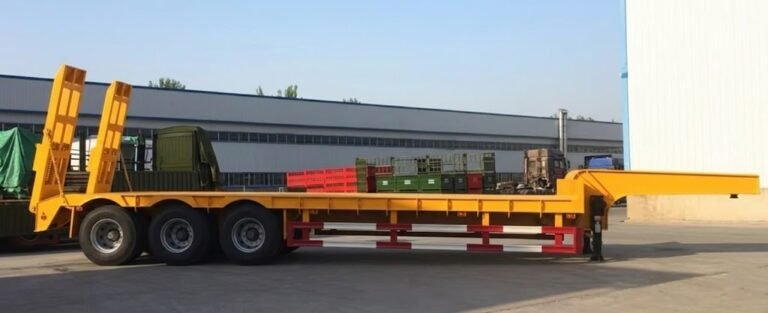
A trailer for excavator transport differs from a trailer built for precast concrete transport. Excavators need low deck heights and ramps. Precast panels need flat, stable surfaces with secure tie down points.
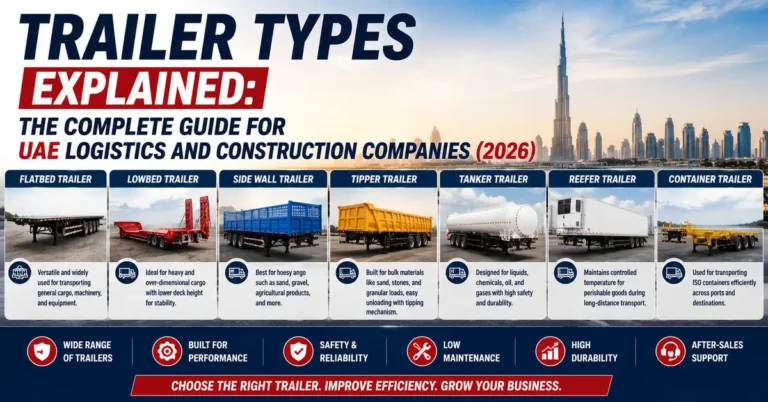
Most UAE construction fleets use a mix of trailer types. This mix usually includes flatbeds, lowbeds, and tippers depending on the project phase.
Why Trailer Selection Matters in 2026
UAE construction activity continues to grow across infrastructure, residential, and industrial sectors. Dubai Municipality and other regulatory bodies enforce strict standards for vehicle weight limits and road safety.
Construction site logistics UAE operations now face tighter scheduling demands. Project delays caused by equipment breakdowns or trailer mismatches can push deadlines back significantly.
According to the UAE Federal Competitiveness and Statistics Centre, construction remains one of the largest contributors to non-oil GDP. This growth means more equipment movement and higher demand for reliable trailers.
Choosing the right trailer also affects safety. A poorly matched trailer increases rollover risk, especially when transporting tall machinery like cranes or drilling rigs.
Key Features to Look For
Load Capacity and Deck Design
Heavy duty flatbed construction trailers typically support loads between 40 and 60 tons. For larger machinery, lowbed trailers offer capacities up to 100 tons with custom configurations available.
Axle Configuration
More axles distribute weight more evenly. This reduces road damage and helps meet UAE axle load regulations.
Build Material
High strength structural steel resists corrosion and impact damage. This matters in UAE conditions where heat and humidity accelerate wear on lower quality materials.
Ramps and Loading Systems
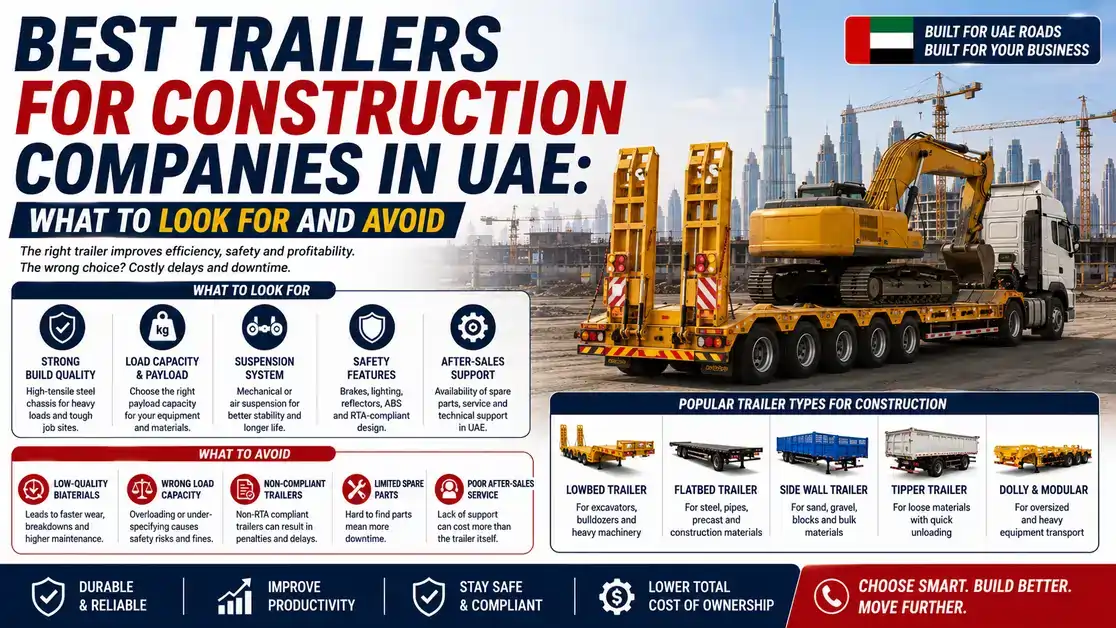
For a trailer for excavator transport, hydraulic ramps or fold down ramps make loading faster and safer. Manual ramps work but slow down operations on busy sites.
Trailer Comparison Table
| Trailer Type | Best For | Load Capacity | Deck Height |
| Flatbed Trailer | General construction materials, steel, pipes | 40 to 60 tons | Standard |
| Low-Bed Trailer | Excavators, cranes, generators | 35 to 100 tons | Ultra-low |
| Tipper Trailer | Sand, gravel, debris removal | 35T to 80T | Standard |
| A-Frame Trailer | Glass, marble, precast panels | Up to 60 tons | Vertical/angled |
| Container Box Trailer | Enclosed materials, tools, equipment | Standard payload | Standard |
Step by Step Selection Process
- Identify the primary cargo type for your project, whether machinery, precast concrete transport, or bulk materials.
- Calculate maximum load weight including the heaviest equipment piece.
- Match deck height to equipment clearance needs, especially for excavators and cranes.
- Check axle configuration against UAE road weight regulations.
- Confirm the manufacturer offers after sales support and spare parts locally.
- Request a site visit or inspection before final purchase.
- Verify the trailer complies with UAE road and safety standards.
Real World Scenario: Sharjah Construction Project
A mid sized contractor working on Sharjah construction projects needed to move a 25 ton excavator between three sites weekly. Their existing flatbed required manual loading ramps, adding 30 minutes per move.
Switching to a lowbed trailer with hydraulic ramps cut loading time to under 10 minutes. Over a year, this saved significant labor hours and reduced equipment handling risks.
This example shows how matching trailer type to actual site needs improves efficiency beyond just transport capacity.
Common Mistakes to Avoid
Many contractors choose trailers based on price alone without checking load capacity against their heaviest equipment. This leads to overloading, which damages trailers and violates UAE transport regulations.
Another mistake involves ignoring deck height requirements. A standard flatbed may not provide enough clearance for tall machinery, causing loading difficulties or damage during transport.
Some buyers also skip checking spare parts availability. When a trailer breaks down on an active Abu Dhabi construction sector project, delays in sourcing parts from overseas suppliers can halt operations for weeks.
Failing to verify custom build options is another issue. Standard trailers do not always fit unusual equipment dimensions, and forcing a mismatch creates safety hazards.
Expert Tips and Best Practices
Work with manufacturers who offer custom builds rather than only standard models. Construction equipment varies widely, and a trailer built to your exact specifications reduces long term operational problems.
Request load testing documentation before purchase. This confirms the trailer meets its stated capacity under real conditions, not just on paper.
Prioritize manufacturers based in the UAE for faster delivery and easier servicing. Local manufacturers understand regional road conditions and climate demands better than overseas suppliers.
Consider future project needs when selecting trailers. A flatbed that works for current projects may not suit upcoming work involving larger machinery or precast concrete transport.
Frequently Asked Questions
Q: What type of trailer is best for transporting excavators in the UAE?
A lowbed trailer works best for excavators because of its low deck height and easier loading angle. Hydraulic ramps make the process faster and safer for heavier machines.
Q: How much weight can a construction flatbed trailer carry?
Heavy duty flatbed construction trailers typically carry between 40 and 60 tons, depending on axle configuration. Custom builds can support higher capacities for specific projects.
Q: Do construction trailers need to meet specific UAE regulations?
Yes, all trailers must comply with UAE road safety and weight distribution standards. Local manufacturers typically build units that already meet these requirements.
Q: Can trailers be customized for unusual equipment sizes?
Many UAE manufacturers offer fully custom builds. This includes adjusting length, axle count, and deck design to match specific machinery dimensions.
Q: What is the difference between a flatbed and a lowbed trailer?
A flatbed has a standard deck height suited for general cargo. A lowbed has a much lower deck, designed for tall machinery like excavators and cranes that need extra clearance.
Conclusion
Selecting the right trailer for construction site logistics UAE operations affects efficiency, safety, and long term costs. Focus on load capacity, deck design, and axle configuration that match your actual equipment needs.
Avoid common mistakes like prioritizing price over specifications or ignoring spare parts availability. Working with a local manufacturer who offers custom builds and after sales support gives your fleet better long term value.
For more guidance on selecting trailers suited to your operations, explore our complete trailer range to find the right match for your construction projects.
For additional reference on UAE transport regulations, consult Roads and Transport Authority Dubai and the Ministry of Industry and Advanced Technology for compliance standards affecting heavy vehicle operations.