Skeleton Trailer for Container Transport in Jebel Ali Port
Jebel Ali handles millions of containers every year, and each one needs a trailer built specifically for that job. A standard flatbed simply will not work for moving ISO containers efficiently.
This guide covers everything UAE logistics companies need to know about skeleton trailer UAE specifications. You will learn how container chassis trailers work, what features matter most for Jebel Ali container transport, and how to choose a reliable supplier.
What Skeleton Trailers Are and How They Work
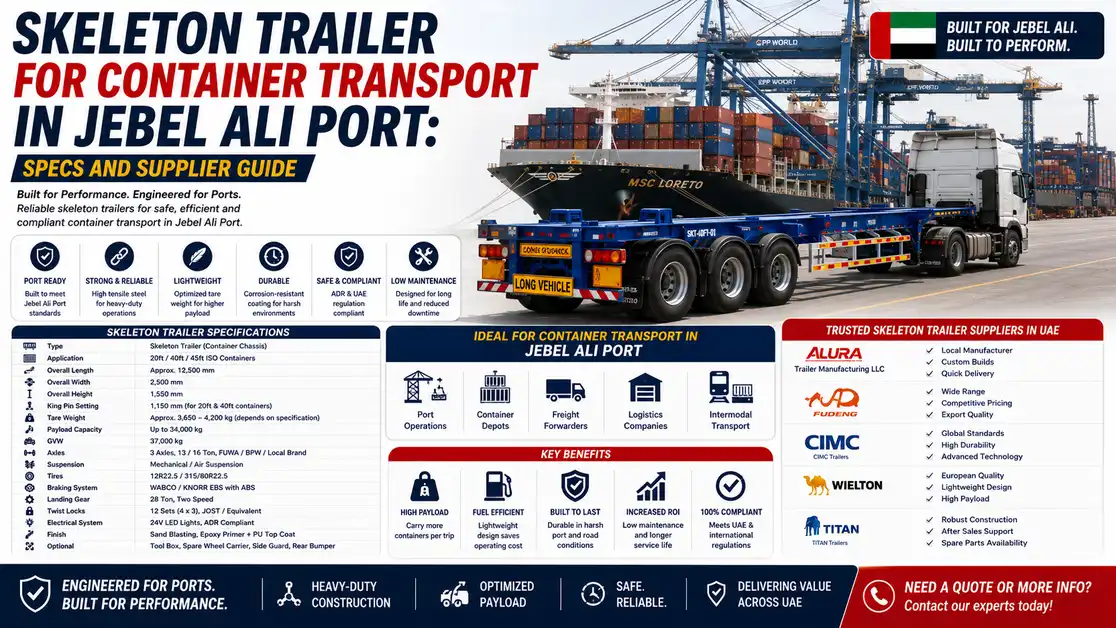
A skeleton trailer is a lightweight chassis designed to carry shipping containers without an enclosed body. The frame consists of a steel skeleton structure with mounting points for containers of different sizes.
Container trailer Dubai port operations rely on these units because they reduce overall trailer weight. Less trailer weight means more cargo capacity within UAE road weight limits.
The core feature of any skeleton trailer is the twist lock system. These rotating locks secure standard ISO containers to the chassis at each corner. Drivers lock containers in place before transport and release them during container handling at ports or depots.
Most skeleton trailers in the UAE support both 20 foot and 40 foot containers. Some extendable models adjust length to accommodate both sizes on a single chassis.
Why Skeleton Trailers Matter for Jebel Ali Operations in 2026
Jebel Ali Port remains one of the busiest container ports in the region. According to DP World, Jebel Ali handled significant container volumes, reinforcing its role as a major transshipment hub for the Middle East.
This volume creates constant demand for efficient container transport between the port, free zones, and inland depots. Skeleton trailers move containers quickly because loading and unloading takes only minutes with a functioning twist lock system.
Free zone operators near Jebel Ali also depend on skeleton trailers for daily operations. Companies moving goods between bonded warehouses and port terminals need reliable chassis units that meet port handling standards.
Fuel efficiency matters too. Lighter skeleton trailers consume less fuel compared to heavier flatbed alternatives carrying the same container weight, reducing operating costs for fleet operators running frequent port routes.
Key Features and Specifications
Load Capacity
Skeleton trailers in the UAE typically support 35 tons using standard BP16T axle configurations. Some models with buggy or dolly extensions handle up to 50 tons for heavier containers.
Twist Lock System
The twist lock system secures containers at all four corners. Quality locks rotate smoothly and hold containers firmly during transport, even on uneven port roads.
Chassis Length Options
Standard skeleton trailers come in fixed lengths for either 20 foot or 40 foot containers. Extendable chassis models adjust to fit both sizes, offering more flexibility for mixed cargo operations.
Build Material
High strength structural steel keeps the chassis durable while minimizing weight. This balance matters for maximizing payload within UAE axle weight regulations.
Skeleton Trailer Specifications Table
| Specification | Standard 20ft Configuration | Standard 40ft Configuration | Extendable Chassis |
| Load capacity | Up to 35 tons | Up to 35 tons | Up to 50 tons with buggy |
| Twist lock points | 4 corners | 4 corners | Adjustable positions |
| Axle configuration | BP16T standard | BP16T standard | BP16T or 32T buggy |
| Best for | Port shuttle runs | Long haul container moves | Mixed container operations |
| Common routes | Jebel Ali to inland depots | Jebel Ali to free zones | Multi port operations |
Step by Step Guide to Choosing a Skeleton Trailer
- Determine your primary container sizes, whether 20 foot, 40 foot, or both.
- Calculate average container weights for your typical cargo to confirm capacity needs.
- Decide between a fixed length chassis or an extendable model based on cargo variety.
- Inspect twist lock quality and confirm smooth rotation without excessive wear.
- Verify axle configuration meets UAE road weight regulations for your routes.
- Confirm the manufacturer offers after sales support for twist lock repairs and part replacements.
- Request a demonstration of container loading and locking before finalizing purchase.
Real World Scenario: Free Zone Operator Near Jebel Ali
A freight forwarding company operating near Jebel Ali Free Zone needed trailers for daily container moves between the port and their warehouse. Their existing flatbeds required manual securing methods that took longer at each stop.
Switching to skeleton trailers with functioning twist lock systems reduced loading time significantly. Drivers could secure containers in under five minutes compared to 15 to 20 minutes with previous methods.
The company also reported fuel savings due to the lighter chassis weight, allowing more containers per trip within weight limits. This example shows how the right skeleton trailer specification directly impacts daily operational efficiency.
Common Mistakes to Avoid
Many buyers choose skeleton trailers based on price without checking twist lock quality. Worn or poorly made locks fail to secure containers properly, creating safety risks during transport.
Another mistake involves ignoring chassis length needs. Operators handling both 20 foot and 40 foot containers sometimes buy only fixed length trailers, limiting operational flexibility.
Some buyers also overlook axle configuration requirements. Using a standard BP16T chassis for consistently heavy containers leads to overloading issues and faster wear on tires and suspension.
Skipping after sales support checks is another common error. Twist lock mechanisms experience regular wear, and sourcing replacement parts quickly matters for minimizing downtime.
Expert Tips and Best Practices
Test twist lock mechanisms thoroughly before accepting delivery. Locks should rotate smoothly and engage firmly without excessive force, ensuring secure container handling at every stop.
Choose extendable chassis models if your operation handles mixed container sizes regularly. The flexibility often outweighs the slightly higher initial cost compared to fixed length units.
Work with manufacturers familiar with Jebel Ali container transport requirements. Local manufacturers understand port access standards and common operational challenges specific to UAE container logistics.
Maintain a regular inspection schedule for twist locks, axles, and structural welds. Container weights and frequent loading cycles create wear patterns that need monitoring over time.
For logistics companies running mixed fleet operations, our guide on flatbed trailer specifications covers additional options for cargo that does not fit standard container dimensions.
Frequently Asked Questions
Q: What is the load capacity of a standard skeleton trailer in the UAE?
Standard skeleton trailers using BP16T axle configurations typically support up to 35 tons. Models with buggy extensions can handle up to 50 tons for heavier container loads.
Q: How does the twist lock system work on a skeleton trailer?
The twist lock system uses rotating locks at each of the four chassis corners. These locks engage with container corner castings, securing the container firmly during transport.
Q: Can one skeleton trailer carry both 20 foot and 40 foot containers?
Extendable skeleton trailers can adjust their length to fit both sizes. Fixed length chassis models are typically built for one specific container size.
Q: What makes skeleton trailers better than flatbeds for container transport?
Skeleton trailers weigh less than flatbeds, allowing more cargo capacity within weight limits. They also feature twist lock systems designed specifically for secure container handling.
Q: How often should twist locks be inspected on container chassis trailers?
Regular inspections, ideally monthly for high frequency operations, help catch wear before locks fail. Twist locks experience constant use in port shuttle operations and need consistent monitoring.
Conclusion
Choosing the right skeleton trailer UAE specification depends on your container sizes, route demands, and load requirements. Whether you need fixed length chassis for consistent 40 foot container moves or extendable models for mixed operations near Jebel Ali, matching specifications to actual needs improves efficiency.
Avoid common pitfalls like prioritizing price over twist lock quality or ignoring axle configuration needs. Working with manufacturers offering custom builds and reliable after sales support gives your fleet better long term value for Jebel Ali container transport operations.
For more options suited to UAE container and logistics operations, explore our complete trailer range to find the right chassis for your fleet.
For further reference on Jebel Ali Port operations, consult DP World official site and the Dubai Customs portal for container transport regulations and procedures.