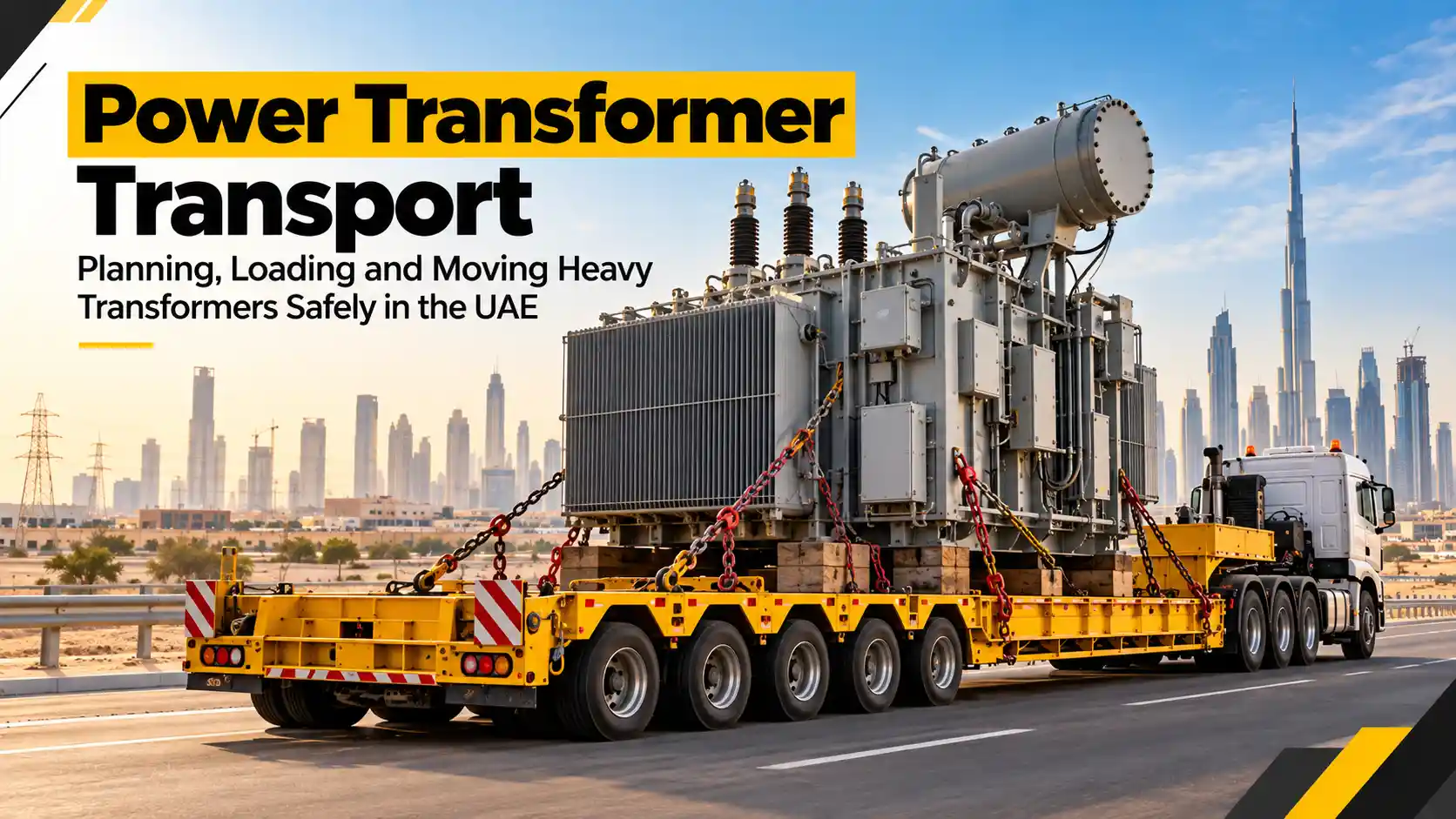
Power transformer transport is a specialist heavy-haul operation that starts long before the transformer reaches a trailer. A large transformer can combine extreme weight, concentrated loading, substantial height and a centre of gravity that is not obvious from its external shape. It may also be sensitive to impact, vibration or excessive tilt during handling and road movement.
For that reason, transporting a transformer safely requires coordinated engineering, route planning, equipment selection, load distribution, securement, permits and unloading preparation. This guide explains the process from the first transport drawing to final delivery, with a focus on UAE road conditions and heavy-vehicle requirements.
Table of Contents
- Why transformer transport needs specialist planning
- Information required before movement
- Choosing the right trailer
- Route surveys and UAE compliance
- Loading methods
- Weight distribution and centre of gravity
- Load securement
- Shock, vibration and tilt monitoring
- Road movement and inspections
- Unloading and final positioning
- Common mistakes
- Pre-transport checklist
- FAQs
Why Transformer Transport Needs Specialist Planning
A power transformer is not ordinary freight. Its transport characteristics depend on more than total mass.
Large units may have a high or offset centre of gravity, a relatively small support footprint and components that cannot be used as lifting or restraint points. Some accessories may need to be removed before movement. The manufacturer may also specify limits for tilt, shock, acceleration or travel orientation.
IEEE C57.150-2023 is specifically concerned with reducing the risk of damage and delays during transportation of transformers and reactors rated 10,000 kVA or higher. That alone illustrates why a major transformer move should be treated as an engineered logistics operation rather than normal cargo haulage.
The transport plan should address the transformer, the trailer, the road route and the destination as one system.
What Information Is Needed Before a Transformer Move?
Before selecting transport equipment, obtain the transformer transport drawing and confirm:
- Shipping weight
- Overall transport length, width and height
- Centre of gravity
- Support footprint
- Approved lifting points
- Approved jacking points
- Approved restraint points
- Permitted travel orientation
- Accessories removed for transport
- Oil condition during transport, where relevant
- Maximum tilt limits, where specified
- Shock or acceleration limits, where specified
- Unloading method
- Final foundation arrangement
A transformer move should not be planned from the nameplate rating alone. Two units with similar electrical ratings can have different physical dimensions, construction, accessories and transport requirements.
Where the manufacturer provides transport-specific instructions, those instructions should take priority over generic hauling practice.
Which Trailers Are Used for Power Transformer Transport?
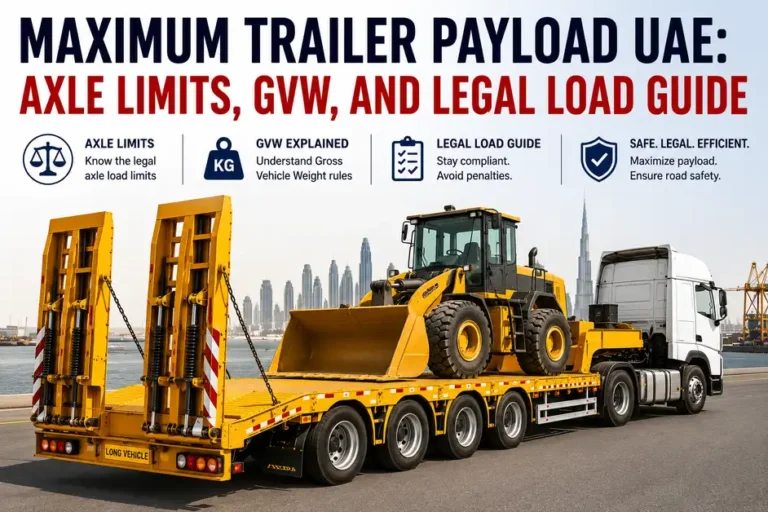
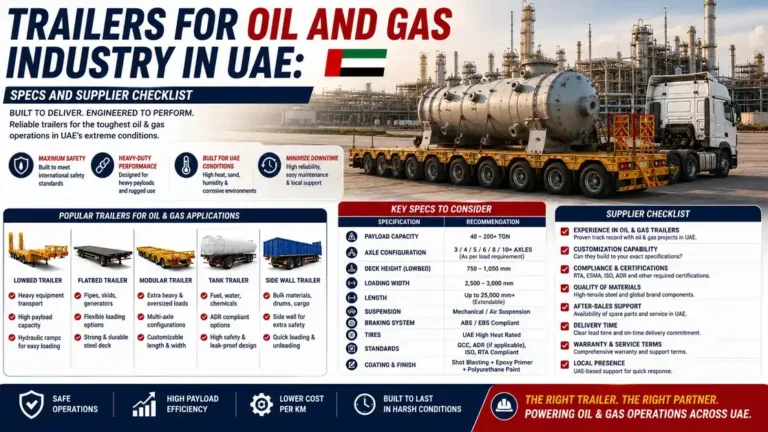
There is no single trailer that is correct for every transformer. Trailer selection depends on weight, dimensions, point loads, centre of gravity, road geometry, axle limits and the required loaded height.
Lowbed Trailers
A lowbed trailer can be suitable for transformers that fall within its engineered structural, deck and axle capacity.
Its main advantage is deck height. By placing the load closer to the road than a conventional flatbed, a lowbed can reduce total transport height and provide more clearance beneath bridges, gantries and other overhead structures.
Before choosing one, planners still need to check:
- Usable deck length and width
- Deck height
- Rated payload
- Concentrated deck load capability
- Axle configuration
- Tractor loading
- Anchor-point arrangement
- Total loaded dimensions
For background on these variables, see the lowbed trailer dimensions guide and lowbed trailer specifications.
Multi-Axle Heavy-Haul Trailers
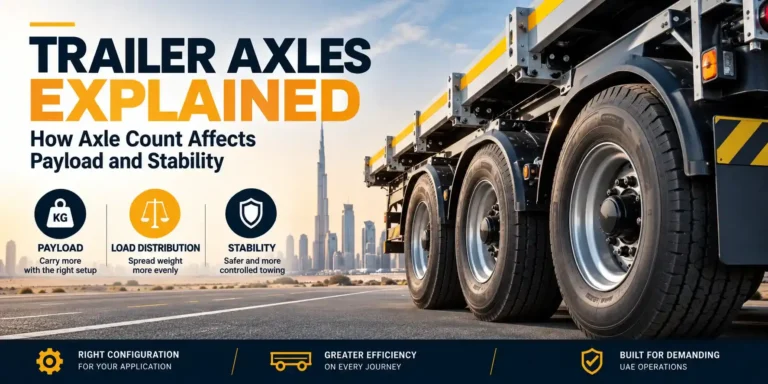
Heavier transformers may need additional axles or axle lines to spread the load.
Adding axles does not automatically make a movement compliant. The actual gross vehicle weight, individual axle loads, axle-group loads and road restrictions still need to be calculated for the specific combination.
Modular Hydraulic Platforms
Very heavy or unusually shaped transformers may require modular hydraulic platforms. These systems can combine multiple axle lines and steering arrangements to distribute load and negotiate complex sites.
Girder-Frame Systems
For some exceptionally heavy transformers, a girder-frame arrangement can support the load between structural beams rather than carrying it entirely on a conventional deck.
The correct sequence is simple: understand the transformer first, assess the route second, then select the transport system.
Why Route Surveys Matter
A major power transformer transport project can fail even when the trailer is technically capable of carrying the load.
The route may contain a bridge with insufficient capacity, a roundabout the transporter cannot negotiate, a steep gradient, low overhead utilities, a narrow gate or inadequate space at the destination.
A route survey should check:
- Bridge capacities
- Road widths
- Vertical clearance
- Horizontal clearance
- Junction geometry
- Turning radius
- Gradients
- Road camber and crossfall
- Pavement condition
- Overhead cables
- Sign gantries
- Traffic islands
- Restricted roads
- Construction zones
- Site entrance geometry
- Space for unloading equipment
The shortest route is not always the usable route.
For large loads, swept-path analysis and site measurements may be more useful than ordinary navigation software. Temporary traffic management or infrastructure coordination may also be required on complex moves.
UAE Weight, Dimension and Permit Requirements
Heavy transformer transportation in the UAE must be checked against the rules that apply to the complete vehicle and route.
The Ministry of Energy and Infrastructure states that maximum permissible gross weight varies by axle count. Its published federal table gives a maximum overall length of 21 metres, width of 2.6 metres and height of 4.6 metres for a truck head and semi-trailer under the standard federal dimensions.
Those figures do not mean every transformer must fit inside them.
The federal framework allows certain non-divisible loads to exceed standard weight or dimension limits when a special transportation permit is obtained and the applicable conditions are met.
Local requirements can also apply.
In Dubai, RTA provides a mobility permit process for overweight and over-dimension vehicles. Its current service information classifies special-load vehicles using thresholds that include weight above 60 tonnes, width above 3.5 metres, height above 4 metres or length above 20 metres.
Dubai also introduced updated truck-movement restrictions from 1 October 2026 on roads across the emirate during peak periods, with Emirates Road exempt from that decision.
For any transformer transport, verify current requirements for the actual journey rather than reusing assumptions from a previous project.
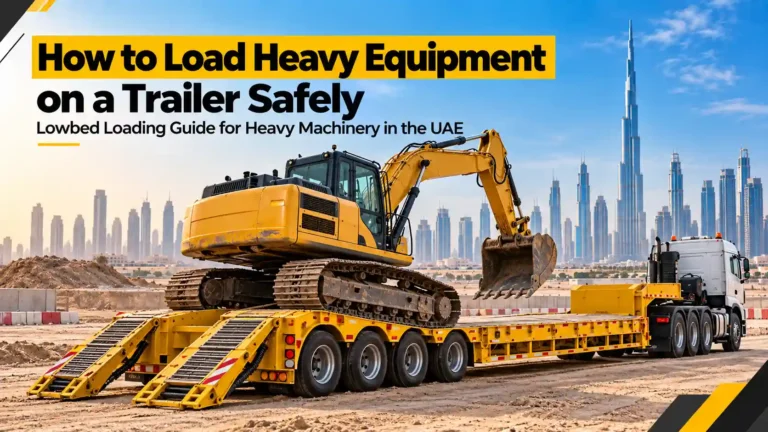
How Are Transformers Loaded?
Loading method depends on transformer design, site access, available lifting equipment and trailer type.
Crane Loading
A crane may lift the transformer directly onto the transport system where access and ground conditions allow.
The lift plan should account for:
- Verified transformer weight
- Crane capacity
- Lift radius
- Rigging geometry
- Approved lifting points
- Ground bearing capacity
- Clearance from nearby structures
Jacking and Skidding
Where crane access is restricted, hydraulic jacks can raise the transformer so a transport platform or skid arrangement can be positioned beneath it.
Jacking and skidding can also be used at the destination to move the transformer from the transporter toward its final foundation.
Hydraulic Gantries
Hydraulic gantries may be useful in industrial buildings or constrained areas where conventional crane access is difficult.
Whatever method is used, the manufacturer’s designated lifting and jacking points should be followed. External parts should never be assumed to be structural lifting points simply because they are accessible.
Weight Distribution and Centre of Gravity
Power transformer transport depends heavily on correct load positioning.
A trailer can be below its nominal payload rating and still have an overloaded axle group if the transformer is positioned incorrectly.
The load-distribution calculation should consider:
- Transformer centre of gravity
- Trailer axle locations
- Tractor fifth-wheel load
- Individual and grouped axle loads
- Left-to-right balance
- Deck point loads
- Support locations
- Total loaded centre of gravity
This is particularly important with transformers because the visible centre of the tank may not match the true centre of gravity.
The load should therefore be positioned according to verified engineering information rather than simply centred by eye.
The trailer weight distribution guide provides additional background on the difference between payload rating, gross vehicle weight and axle loading.
How Is a Transformer Secured?
A transformer restraint system must control movement created by acceleration, braking, cornering, road irregularities and emergency manoeuvres.
Depending on the project, securement can involve:
- Rated chains
- Engineered restraints
- Blocking
- Stops
- Anti-slip materials
- Saddles
- Support frames
- Tensioning devices
- Rated trailer anchor points
The exact arrangement must be designed for the transformer and transport configuration.
A sound transformer transportation procedure should identify the approved tie-down points, required restraint equipment, installation sequence, tensioning method, inspection responsibilities and actions to take if any movement is detected.
Do not attach chains to bushings, radiators, pipework or other external components unless the manufacturer has specifically approved them for that purpose.
The same principle applies to trailer anchor points. Their position is useful only if their rating and load path are suitable for the intended restraint forces.
Shock, Vibration and Tilt Monitoring
Visible condition is not the only concern during power transformer transport.
A transformer can arrive without obvious external damage yet still have experienced a significant impact or abnormal movement during loading, transit or unloading.
Projects may therefore use impact or shock recorders to monitor acceleration events. IEEE and CIGRE transformer transportation work includes impact-recorder application and data interpretation among the issues considered in transport planning.
Monitoring can help document events such as:
- Hard braking
- Vertical impacts
- Lateral acceleration
- Handling shocks
- Excessive vibration
- Abnormal tilt
A shock recorder does not make a poor transport plan safe. It is a monitoring tool, not a replacement for correct equipment, route planning, securement or controlled driving.
Road Movement and In-Transit Inspection
A transformer transport truck and trailer combination may be longer, wider, taller and much heavier than normal road traffic.
Driving technique should reflect that.
Key considerations include:
- Increased braking distance
- Low-speed turning
- Lane positioning
- Bridge approaches
- Gradients
- Road camber
- Overhead clearance
- Tyre condition
- Suspension behaviour
- Escort communication
- Permit conditions
Sudden steering or braking increases forces on both the cargo and the restraint system.
Where the project plan requires inspection stops, checks can include restraint tension, load position, tyres, wheel assemblies, suspension, hydraulic equipment and monitoring devices.
If the transformer or its restraints show signs of movement, the cause should be investigated before the journey continues.
Unloading and Final Positioning
Transport planning should include the final metres of the journey.
Before arrival, confirm that the destination provides:
- Suitable ground conditions
- Sufficient turning space
- Clear overhead access
- Space for cranes, jacks or gantries
- A prepared unloading zone
- Access to the final foundation
Possible unloading methods include crane lifting, hydraulic jacking, skidding, gantry lifting or a controlled trailer-to-foundation transfer.
Ground bearing capacity can become critical when cranes or jacks impose concentrated loads.
After unloading, the owner, manufacturer or commissioning team may require inspection before installation or energization. Where monitoring equipment was fitted, recorded data may also form part of the delivery assessment.
Common Transformer Transport Mistakes
Choosing a Trailer Only by Payload
Payload capacity is only one part of the decision. Point loading, axle distribution, deck dimensions, centre of gravity and total transport height also matter.
Skipping a Detailed Route Survey
A transformer can fit on the trailer and still be unable to complete the route.
Guessing the Centre of Gravity
Incorrect assumptions can affect axle loads and stability.
Using Convenient Instead of Approved Restraint Points
Accessible components are not automatically structural tie-down points.
Ignoring the Final Site Approach
The project can be delayed at the destination if the transporter cannot negotiate the gate, turn toward the foundation or position for unloading.
Treating a Permit as an Engineering Approval
A permit does not replace trailer calculations, securement design, route assessment or manufacturer instructions.
Reusing an Old Transport Plan
Different transformer dimensions, trailer configurations, road works or permit conditions can change the movement requirements.
Power Transformer Transport Checklist
Before a power transformer transport operation starts, confirm the following.
Transformer
- Shipping weight verified
- Transport dimensions verified
- Centre of gravity identified
- Manufacturer transport drawing available
- Lifting points confirmed
- Jacking points confirmed
- Restraint points confirmed
- Required orientation confirmed
- Shock and tilt limits confirmed where applicable
Trailer and Load Engineering
- Trailer type selected from actual load data
- Structural capacity checked
- Deck point loads assessed
- Axle loads calculated
- Tractor loading checked
- Loaded height, width and length calculated
Route and Compliance
- Route survey completed
- Bridges and clearances assessed
- Turning geometry checked
- Site entrance inspected
- Federal requirements reviewed
- Relevant local authority requirements checked
- Required permits obtained
- Traffic-management or escort requirements confirmed
Loading and Securement
- Loading method approved
- Ground conditions checked
- Lifting or jacking capacity verified
- Restraint plan available
- Restraints inspected
- Monitoring equipment installed where required
Before Departure
- Trailer inspected
- Tyres and wheels checked
- Brakes and lights checked
- Load position confirmed
- Restraints verified
- Permit documentation available
- Driver and support team briefed
- Destination unloading plan confirmed