Trailer Manufacturing Timeline UAE: Realistic Timelines from Order to Delivery
Ordering a custom trailer feels straightforward until the question comes up. When will it actually be ready?Trailer Manufacturing Timeline UAE: Timelines from Order to Delivery
The answer depends on more factors than most buyers expect. This guide breaks down trailer manufacturing time UAE realities, explaining what happens between placing an order and final delivery, plus what affects custom trailer lead time for different trailer types.
What Trailer Manufacturing Timeline Involves and How It Works
Trailer order to delivery timelines cover several distinct stages. These include design confirmation, material procurement, fabrication, quality checks, and final delivery logistics.
For standard trailer models, manufacturers often have base designs ready, reducing the design phase significantly. Custom builds require additional time for engineering drawings and specification confirmation before fabrication begins.
The trailer production process at facilities in Sajja Industrial Area typically follows sequential stages. Steel cutting and frame assembly happen first, followed by axle installation, welding, and finishing work like painting or coating.
Material availability affects timelines directly. If required steel grades or specific axle components are in stock at a Sharjah manufacturing facility or nearby suppliers, production moves faster than when materials need ordering from external sources.
Why Manufacturing Timelines Matter in 2026
Construction and logistics projects often operate on tight schedules. A delayed trailer delivery can stall equipment transport, affecting entire project timelines for sectors like construction or oil and gas logistics.
Accurate lead time expectations help businesses plan better. Knowing realistic custom trailer lead time figures allows companies to order well ahead of when they actually need new equipment, avoiding rushed decisions or operational gaps.
Demand fluctuations also affect timelines. During periods of high construction activity across the UAE, manufacturers may have fuller production schedules, which can extend lead times beyond typical estimates.
Understanding the trailer production process helps buyers communicate more effectively with manufacturers. Knowing what each stage involves makes it easier to ask relevant questions about potential delays or customization impacts.
Key Factors Affecting Manufacturing Time
Standard vs Custom Specifications
Standard trailer models with existing designs move through production faster since engineering work is already complete. Custom builds require additional time for design confirmation and specification adjustments.
Material Availability
Steel and component availability significantly affects timelines. Manufacturers with strong supplier relationships, particularly those operating from Sajja Industrial Area, often access materials faster due to proximity to steel suppliers.
Trailer Complexity
Simple flatbed trailers generally require less fabrication time than complex builds like lowbeds with hydraulic systems or skeleton trailers with specific twist lock configurations.
Current Production Workload
Manufacturer capacity at the time of ordering affects how quickly your trailer enters the production queue. Busy periods may extend timelines even for standard models.
Manufacturing Timeline Comparison Table
| Trailer Type | Design Complexity | General Timeline Factors |
| Flatbed Trailer | Low to moderate | Standard designs often available, faster fabrication |
| Skeleton Trailer | Moderate | Twist lock configuration and chassis length affect timing |
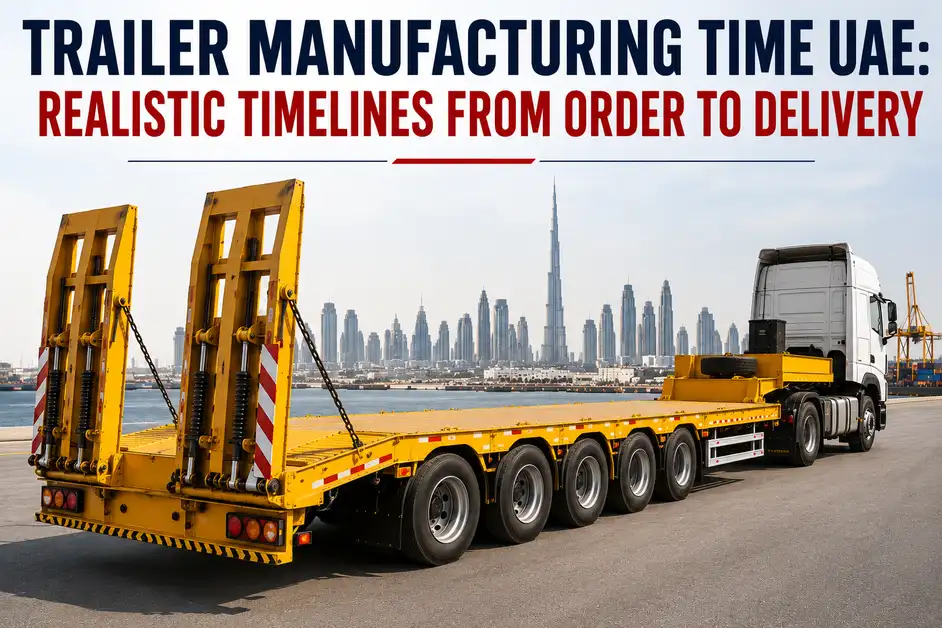
| Low-Bed Trailer | Moderate to high | Axle configuration and hydraulic systems add complexity |
| Tipper Trailer | Moderate to high | Hydraulic system installation extends production time |
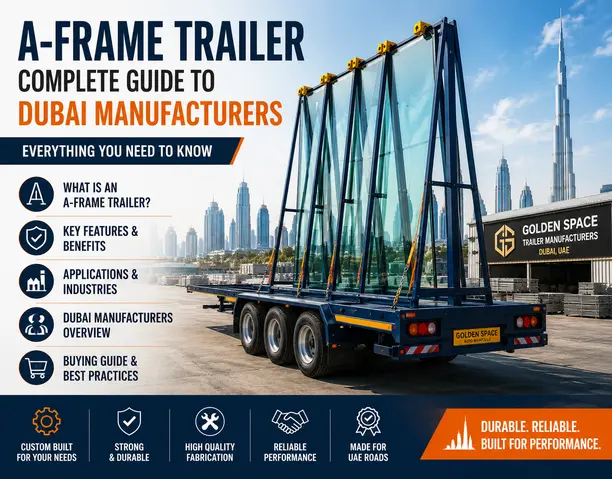
| A-Frame Trailer | Moderate | Frame angle specifications affect fabrication steps |
| Custom Builds | Varies significantly | Design confirmation phase adds time before fabrication begins |
Exact timelines vary by manufacturer, current workload, and specific order details. Always request a written timeline estimate before confirming your order.
Step by Step Trailer Production Process
- Initial consultation to confirm trailer type, specifications, and any custom requirements.
- Design confirmation, including engineering drawings for custom builds requiring approval before fabrication starts.
- Material procurement, where steel and components get sourced if not already in stock.
- Frame fabrication, including steel cutting, cutting to size, and initial structural assembly.
- Axle installation and welding work to attach axles and structural reinforcements.
- Finishing work, including painting, coating, and installation of additional features like lights or hydraulic systems.
- Quality inspection to verify the trailer meets specifications before delivery preparation.
- Delivery scheduling and transport to the buyer’s location.
Real World Scenario: Custom Lowbed Order Timeline
A mining company ordered a custom lowbed trailer with specific axle modifications for transporting heavy equipment. The order required design confirmation since the axle configuration differed from standard models.
After design approval, the manufacturer confirmed material availability for the required axle components, sourced partly from local suppliers near their Sharjah manufacturing facility. Fabrication proceeded through frame assembly, axle installation, and hydraulic system integration for the trailer’s tipping function.
The company had planned their equipment transport schedule with buffer time beyond the initial estimate, which proved useful since the custom axle work added time compared to standard model timelines. The trailer arrived within the buffered schedule, supporting the company’s project timeline without disruption.
Common Mistakes to Avoid
Many buyers underestimate custom trailer lead time by assuming all trailers follow the same production timeline regardless of specifications. Custom builds genuinely require more time than standard models due to design and material sourcing steps.
Another mistake involves not requesting written timeline estimates before ordering. Verbal estimates can be optimistic, and having documentation helps manage expectations and plan accordingly.
Some buyers order trailers too close to when they actually need them, leaving no buffer for potential delays. Material availability or design revisions can extend timelines beyond initial estimates.
Failing to confirm whether quoted timelines include delivery transport time is another common issue. Trailer order to delivery figures should clarify whether they cover production only or include final transport to your location.
Expert Tips and Best Practices
Request a detailed breakdown of the trailer production process timeline when ordering. Understanding which stages take longest helps you anticipate where delays might occur.
Order custom trailers well ahead of when you need them operational. Building in buffer time accounts for material sourcing delays or design revision rounds that sometimes occur during custom builds.
Ask manufacturers about their current production workload. A manufacturer with a fuller schedule may quote longer custom trailer lead time figures than one with more immediate capacity.
Confirm material specifications early in the design phase. Changes to steel grades or axle configurations after fabrication begins can significantly extend timelines compared to confirming specifications upfront.
For buyers wanting to understand how trailer complexity affects both timeline and cost, our guide on trailer pricing for different types covers specifications that influence both production time and final pricing.
Frequently Asked Questions
Q: How long does standard trailer manufacturing take in the UAE?
Standard models with existing designs generally move through production faster than custom builds, since design and material sourcing steps are often already established. Exact timelines depend on current manufacturer workload.
Q: Why do custom trailers take longer to manufacture than standard models?
Custom builds require design confirmation and engineering drawings before fabrication begins. Material sourcing for non standard components, like specific axle configurations, can also add time.
Q: Does trailer order to delivery time include transport to my location?
This varies by manufacturer. Some quotes cover only production time, while others include delivery transport. Always confirm what timeline figures represent when requesting quotes.
Q: Can I speed up the trailer production process?
Confirming specifications quickly during the design phase and choosing standard configurations where possible can help. However, fabrication quality should not be rushed, as this affects long term durability.
Q: What stages take the longest in trailer manufacturing?
For custom builds, design confirmation and material procurement often take significant time before fabrication even starts. For standard models, fabrication and finishing work represent the main production stages.
Conclusion
Trailer manufacturing time UAE expectations depend heavily on whether you order standard or custom specifications. Custom trailer lead time extends due to design confirmation and material sourcing, while standard models move through the trailer production process more predictably.
Avoiding common mistakes like underestimating custom build timelines or skipping written estimates helps with better project planning. Ordering with buffer time and confirming specifications early reduces the risk of delays affecting your operations.
For more on trailer specifications that affect both manufacturing time and operational fit, explore our complete trailer range to find options matching your project timeline needs.
For further reference on UAE manufacturing standards, consult the Ministry of Industry and Advanced Technology and the Sharjah Chamber of Commerce and Industry for information on industrial production standards.