Dumper Truck Price in UAE: Costs, Types and Buying Guide
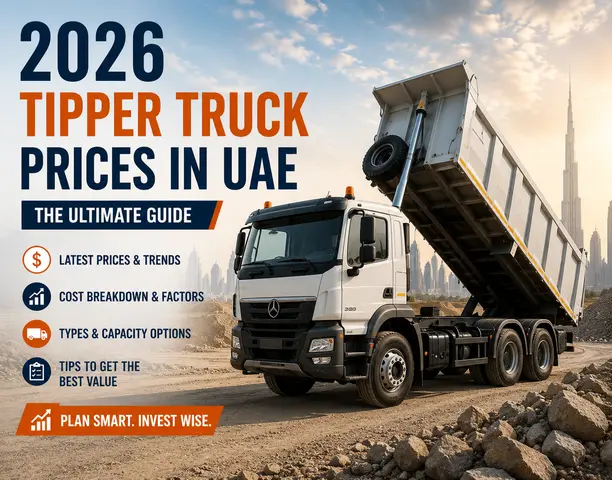
The dumper truck price in UAE varies according to payload, configuration, condition, age, brand, and operating history. A new heavy-duty vehicle can cost substantially more than a smaller or used machine. Buyers should therefore compare complete specifications rather than rely on one advertised figure.
Engine output, drivetrain, axles, body construction, operating hours, service history, parts availability, and intended application can all change the real value. UAE road and worksite conditions should also be considered before choosing a vehicle.
How Much Does a Dumper Truck Cost in the UAE?
There is no single market price for every dumper truck. Current UAE listings show wide differences between vehicles because model year, payload, condition, operating hours, and equipment vary. Marketplace prices are useful for comparison, but only when similar trucks are evaluated together. Comparing the dumper truck price in UAE requires matched specifications.
Start by identifying the material, average load, route, terrain, and expected daily trips. Then compare vehicles with similar payloads and configurations.
New Dumper Truck Price
New equipment usually has a higher purchase cost because it combines current specifications, lower initial wear, and manufacturer support. Warranty, finance terms, delivery, and included equipment can also affect the final quotation.
Used Dumper Truck Price
Used vehicles can reduce the initial investment, but condition becomes a major value factor. Two trucks of the same age can have very different prices because of operating hours, maintenance history, previous workloads, and repairs.
Inspect the chassis, body, engine, transmission, axles, suspension, tyres, brakes, hydraulics, and electrical systems. Service records can be as important as model year when assessing a used vehicle.
Small Dumper Truck Price
Smaller machines generally cost less because they use lighter drivetrains, bodies, and running gear. They can suit compact construction sites, landscaping, and projects where maneuverability matters more than maximum payload.
More trips can increase fuel, driver time, and project duration.
What Determines Dumper Truck Price?
Several technical factors explain why similar-looking vehicles can have different prices.
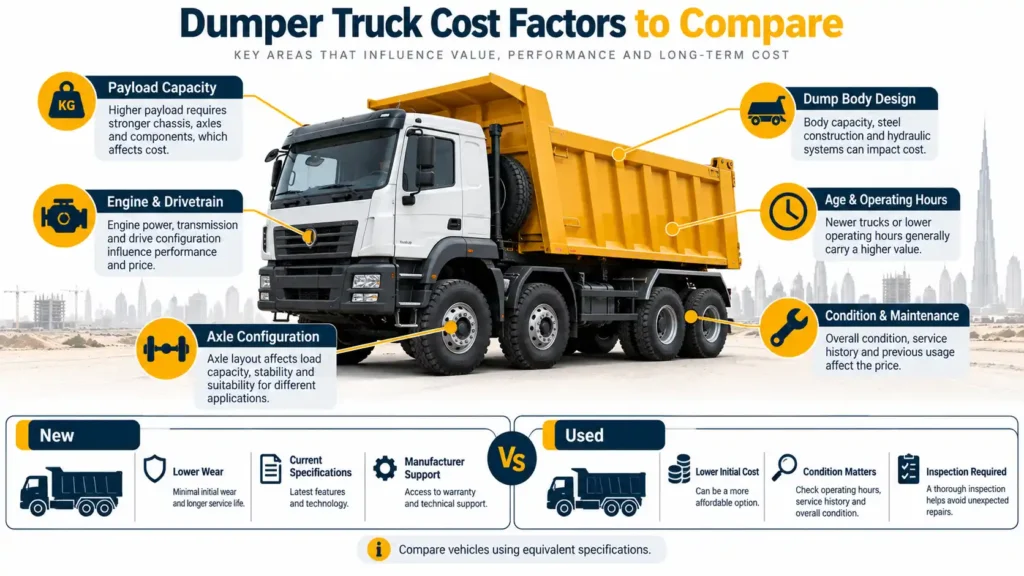
Payload Capacity
Higher payload generally requires stronger chassis, axles, suspension, tyres, brakes, and body construction. Choosing a vehicle around normal loads can provide better efficiency than paying for capacity that is rarely required.
Engine and Drivetrain
Engine power, torque, transmission, and drive configuration affect both capability and cost. A vehicle working on difficult terrain may need a different drivetrain from one operating mainly on established roads and construction sites.
Axle Configuration
Axle layout affects load distribution, traction, stability, and running-gear requirements. Buyers should match the configuration to the intended load rather than simply choosing the highest available axle count.
Dump Body Design
Body volume, steel construction, floor strength, hydraulic equipment, and discharge arrangement can influence price. Abrasive materials can require more durable construction than lighter site materials.
Age, Mileage and Operating Hours
For used equipment, age alone does not determine value. Mileage, operating hours, maintenance records, previous loading conditions, and visible wear should be considered together.
Dumper Truck Types
Dumper trucks differ significantly in size and configuration, so prices should not be compared without considering their intended work.
Light-Duty Dumper Trucks
These suit lighter loads and tighter worksites where maneuverability is important. They can be practical when daily material quantities do not justify a larger commercial vehicle.
Medium-Duty Dumper Trucks
Medium-duty vehicles balance payload, operating cost, and maneuverability. They can suit general construction and material movement where heavy-haul capability is unnecessary.
Heavy-Duty Dumper Trucks
Heavy-duty units are built around demanding applications and higher payloads. Stronger drivetrains, axles, chassis, suspension, and braking systems generally increase their purchase cost.
Dumper Truck Specifications to Compare
Payload and Gross Vehicle Weight
Payload is the amount of material a dumper truck can carry, while Gross Vehicle Weight (GVW) is the truck’s total permitted loaded weight. GVW includes the truck itself, cargo, fuel, driver, fluids, and other equipment. Therefore, a higher GVW does not always mean the truck has the same increase in usable payload.
For example, a truck with a 40-tonne GVW and a 15-tonne empty weight may have a theoretical payload of 25 tonnes. The actual usable load can still be restricted by axle ratings, road regulations, or the manufacturer’s approved specification.
When comparing dumper trucks, buyers should review payload, empty weight, GVW, and axle ratings together. This gives a more accurate understanding of the truck’s working capacity and helps avoid choosing a vehicle based only on its headline payload.
Engine, Transmission and Drive
Compare engine power, torque, transmission, drive layout, and operating requirements. These should match the terrain and expected daily workload.
Dimensions and Body Capacity
Length, width, height, turning space, and body volume affect site access and loading efficiency. Check these against the actual project environment.
Suspension, Tyres and Brakes
Suspension and tyres support the loaded vehicle, while brakes control it under operating conditions. Dubai RTA’s 2026 heavy-vehicle safety campaign highlighted tyres, brakes, lights, reflective markings, and safe loading as key trailer safety areas.
New vs Used Dumper Trucks
New equipment offers predictable condition, current specifications, and potentially stronger manufacturer support. It can suit fleets that need consistent availability and long-term use.
Used equipment can provide a lower initial cost and access to proven models. However, maintenance history and inspection become more important.
When evaluating the dumper truck price in UAE, compare the purchase cost with expected repairs, downtime, fuel consumption, tyres, and parts requirements.
Dumper Truck Applications in the UAE
Dumper trucks are used to move loose materials between loading and discharge points. Typical applications include construction, infrastructure, quarrying, earthmoving, land development, and bulk material transport.
Configuration depends on material, route, terrain, loading equipment, and trip frequency.
Dumper Truck Ownership Costs
Purchase price should be considered alongside ongoing operating costs. Fuel, scheduled servicing, tyres, repairs, insurance, and downtime can materially affect total ownership cost.
Parts availability also matters to commercial fleets. A lower-cost vehicle can become less attractive if parts are difficult to source or repairs keep the truck out of service.
Financing terms should be reviewed separately from the vehicle price. Buyers should compare deposits, repayment terms, finance charges, and included services.
Where to Buy a Dumper Truck in the UAE
Buyers can source vehicles through manufacturers, authorized dealers, used-equipment dealers, and heavy-equipment marketplaces. Each route differs in inventory, warranty, inspection, financing, and after-sales support.
Marketplace listings are useful for comparing current asking prices across brands and conditions. Manufacturer and dealer channels can provide stronger access to current specifications, parts, and technical assistance.
Businesses that also need dedicated transport equipment can review UAE Trailers for Golden Space’s trailer manufacturing range.
How to Compare Dumper Truck Prices
A useful comparison should record model year, payload, engine, drive configuration, operating hours, condition, body specification, and included equipment. Comparing different specifications as though they were identical can produce a misleading result.
Then review the commercial terms. Check delivery, warranty, inspection, financing support, documentation, and after-sales coverage where applicable.
For fleets requiring custom transport equipment, Trailer Manufacturer in Dubai provides a local manufacturing option alongside truck operations.
UAE Considerations Before Buying a Dumper Truck
UAE conditions can include high temperatures, dust, heavy traffic, construction access, and high daily utilization. These factors can increase the importance of cooling, tyres, maintenance, service support, and parts availability.
Weight and vehicle compliance should also be verified for the intended configuration and route. Buyers should obtain current technical and registration documentation before putting a commercial vehicle into service.
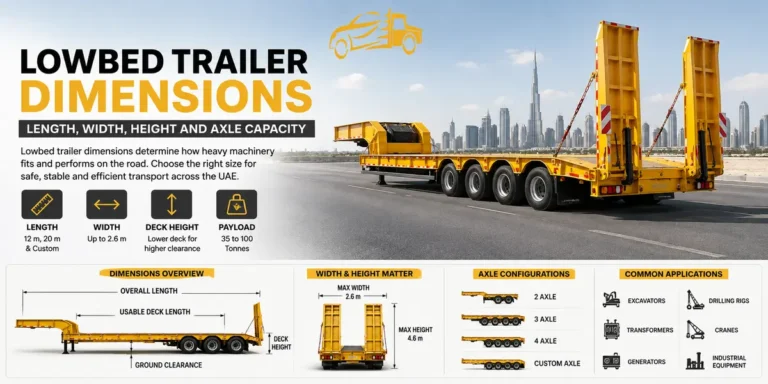
When the job involves transporting machinery rather than loose material, a Low Bed Trailer can provide a more suitable transport solution.
How to Choose the Right Dumper Truck
Start with the normal payload rather than the maximum available rating. Identify the material, average load, route, terrain, loading equipment, and expected trips per day.
Then shortlist vehicles that match those requirements. Consider purchase cost, operating cost, service support, parts availability, and expected utilization together.
Common Dumper Truck Buying Mistakes
Choosing only the lowest advertised price is one common mistake. A cheaper vehicle with high hours, poor maintenance history, or limited parts support may create higher costs later.
Another mistake is comparing trucks with different payloads and configurations as if they were equivalent.
For fleets, standardizing key specifications can also simplify maintenance, driver training, parts management, and future replacement planning.
Frequently Asked Questions
Is the cheapest dumper truck always the most economical?
Not necessarily. Value depends on the vehicle’s specification, condition, operating cost, support, and suitability for the intended workload.
Can operating hours matter more than model year?
They can be a major consideration for used equipment. Hours indicate utilization, but they should be reviewed together with service records and physical condition.
Should a buyer request a pre-purchase inspection?
Yes. A qualified inspection can identify mechanical, structural, electrical, and hydraulic problems that may not be obvious during a basic viewing.
Can a dump body be modified later?
Some modifications may be possible, but compatibility with the chassis, hydraulic system, weight rating, and intended application must be confirmed before any change.
What records should be kept after buying a used dumper truck?
Keep identification details, technical specifications, service records, inspection reports, ownership documents, warranty information, and major repair records. These documents support fleet management and future resale.