15 Most Common Trailer Problems in UAE and How to Fix Them
A trailer breakdown on a busy Sheikh Zayed Road during peak hours can cost more than just repair fees. It can mean missed deliveries, project delays, and safety risks.
Most trailer issues follow predictable patterns, especially in UAE conditions. This guide covers trailer problems and solutions that fleet operators encounter most often, helping you identify issues early and fix them before they become costly breakdowns.
What Common Trailer Problems Are and How They Develop
Trailer problems generally fall into a few categories. These include mechanical issues like brakes and suspension, tyre related problems, electrical faults, and structural wear from regular use.
UAE conditions accelerate certain problems. Heat affects tyre pressure and brake performance. Dust and sand contribute to electrical connection issues and accelerated wear on moving parts.
Most issues develop gradually before becoming serious. Trailer brake issues often start as minor performance reductions before progressing to complete failures if ignored. Similarly, trailer suspension problems usually begin with uneven tyre wear before causing handling issues.
Understanding these patterns helps operators catch problems during regular inspections rather than discovering them during breakdowns.
Why Addressing These Problems Matters in 2026
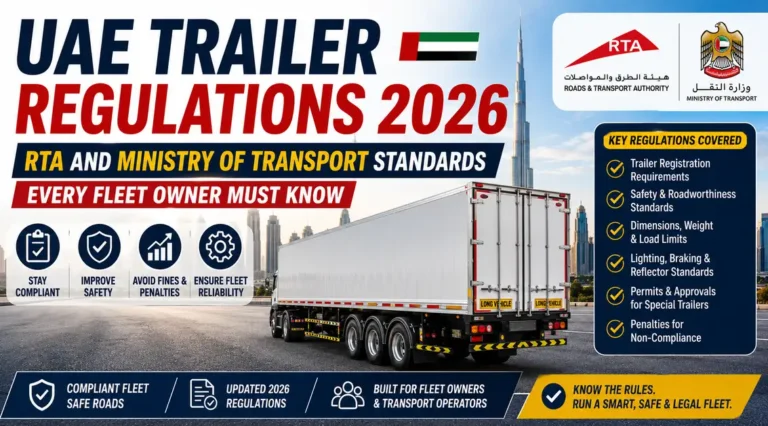
Vehicle safety standards in the UAE fall under regulation by the Roads and Transport Authority and the Federal Traffic Council UAE. Trailers with mechanical issues can fail inspections, leading to fines or operational restrictions.
According to the RTA, vehicle safety inspections check multiple systems including brakes, tyres, and lighting to ensure roadworthiness. Trailers with unresolved issues in these areas risk failing required inspections.
Beyond compliance, unresolved trailer problems create safety hazards. Brake issues increase stopping distances, while electrical faults can cause lighting failures that reduce visibility for other drivers, particularly during night operations.
Cost implications also matter. Catching trailer suspension problems early through alignment adjustments costs significantly less than replacing damaged axles or tyres from prolonged uneven wear.
The 15 Most Common Trailer Problems and Solutions
1. Worn Brake Pads
Brake pads wear faster under heavy loads and frequent stops. Solution: inspect pad thickness monthly and replace before they reach minimum thickness specifications.
2. Brake Fade During Long Hauls
Trailer brake issues like fade occur when brakes overheat from continuous use. Solution: allow brakes to cool during long routes and avoid excessive downhill braking.
3. Air Leaks in Brake Lines
Air leaks reduce braking efficiency and can cause warning lights to activate. Solution: inspect brake line connections regularly and replace worn seals immediately.
4. Uneven Tyre Wear
Trailer tyre problems often show as uneven wear patterns across the tread. Solution: check wheel alignment and rotate tyres according to a regular schedule.
5. Low Tyre Pressure
Hot UAE roads cause pressure fluctuations that lead to underinflation if not monitored. Solution: check tyre pressure every few days during summer months.
6. Tyre Sidewall Cracking
Heat exposure causes rubber to degrade over time, leading to sidewall cracks. Solution: inspect tyres regularly and replace units showing visible cracking.
7. Faulty Trailer Lights
A trailer electrical fault often appears first as non functioning brake lights or indicators. Solution: check wiring connections for corrosion and replace damaged bulbs or connectors.
8. Wiring Harness Damage
Dust and vibration can damage wiring harnesses over time. Solution: inspect harness routing for wear points and secure loose wiring away from moving parts.
9. Battery or Power Connection Issues
Electrical faults sometimes stem from poor connections at the trailer plug. Solution: clean connection points regularly and ensure secure attachment to the prime mover.
10. Sagging Suspension
Trailer suspension problems like sagging indicate worn springs or air bag issues. Solution: inspect suspension components during regular maintenance and replace worn parts promptly.
11. Uneven Ride Height
This often results from suspension wear on one side more than another. Solution: check suspension components on both sides and address imbalances through repair or replacement.
12. Loose or Worn Wheel Bearings
Bearings wear from heat and heavy loads, causing wheel wobble if left unaddressed. Solution: inspect bearings during regular service and repack with grease according to schedule.
13. Cracked Welds on Chassis
Structural stress from heavy loads and heat expansion can cause weld cracks over time. Solution: inspect chassis welds regularly, particularly near axle mounting points.
14. Rust and Corrosion
Coastal humidity accelerates corrosion on metal components, especially in areas like Fujairah and Sharjah. Solution: apply protective coatings and inspect for early rust signs regularly.
15. Hydraulic System Leaks
For tippers and trailers with hydraulic systems, leaks reduce lifting performance. Solution: check hydraulic fluid levels and inspect hoses for wear or damage regularly.
Problem Severity and Inspection Frequency Table
| Problem Category | Typical Cause | Recommended Inspection Frequency |
| Brake issues | Heat, heavy use, worn components | Every 2 weeks during summer |
| Tyre problems | Heat, underinflation, alignment | Every 2 to 3 days during summer |
| Electrical faults | Dust, corrosion, vibration | Monthly |
| Suspension problems | Heavy loads, wear over time | Monthly |
| Structural issues | Heat expansion, stress cycles | Quarterly |
Step by Step Inspection Process
- Begin with a visual check of tyres for pressure, tread wear, and sidewall condition.
- Test brake response and listen for unusual sounds during application.
- Check all lights including brake lights, indicators, and reverse lights for proper function.
- Inspect wiring connections at the trailer plug for corrosion or looseness.
- Examine suspension components for visible wear, sagging, or uneven ride height.
- Check chassis welds near axle mounts and stress points for cracks.
- For hydraulic equipped trailers, check fluid levels and hose condition.
Real World Scenario: Catching Suspension Issues Early
A logistics fleet operator noticed one trailer pulling slightly to one side during transport. Initial inspection revealed uneven tyre wear, a common early sign of trailer suspension problems.
Further inspection found a worn suspension component on one side, causing the uneven ride height. Replacing the part before further damage occurred prevented more costly axle repairs and avoided a potential roadside breakdown.
This example shows how addressing trailer problems and solutions early through regular inspection prevents minor issues from becoming major repairs.
Common Mistakes to Avoid
Many operators skip regular brake inspections, assuming brakes only need attention when problems become obvious. By the time trailer brake issues become noticeable, pads may already be dangerously worn.
Ignoring small electrical faults is another common mistake. A single faulty light might seem minor, but it indicates wiring issues that can spread to other connections over time.
Some operators delay addressing tyre sidewall cracking, assuming tyres remain safe if tread depth looks adequate. Cracked sidewalls can fail suddenly regardless of tread condition.
Skipping chassis weld inspections is also common, since these issues are not always visible during quick checks. Structural problems often develop silently until they cause significant damage.
Expert Tips and Best Practices
Keep a written maintenance log documenting inspection dates and findings for each trailer. This helps identify recurring issues and track component lifespan over time.
Address electrical faults immediately rather than waiting for scheduled maintenance. Wiring issues often worsen quickly, especially in dusty UAE conditions.
Train drivers to report unusual sounds, vibrations, or handling changes immediately. Early reports often lead to catching trailer suspension problems before they cause tyre damage.
Schedule more frequent inspections during summer months when heat accelerates wear on brakes, tyres, and electrical connections. Following a seasonal maintenance approach reduces breakdown risks significantly.
For more detailed guidance on seasonal maintenance schedules, our guide on trailer maintenance in UAE heat covers specific tips for extending component lifespan during extreme temperatures.
Frequently Asked Questions
Q: What are the most common trailer brake issues in the UAE?
Worn brake pads, brake fade from heat, and air leaks in brake lines are among the most common issues. Regular inspection and prompt component replacement help prevent these problems.
Q: How can I prevent trailer tyre problems in hot weather?
Check tyre pressure frequently, ideally every 2 to 3 days during summer. Also inspect for sidewall cracking, which develops faster under high heat exposure.
Q: What causes trailer electrical faults most often?
Dust accumulation, corrosion at connection points, and wiring damage from vibration are common causes. Regular cleaning and inspection of connections help prevent these faults.
Q: How do I know if my trailer has suspension problems?
Signs include uneven tyre wear, the trailer pulling to one side, or noticeable changes in ride height. These symptoms warrant immediate suspension inspection.
Q: Are trailer inspections required by UAE authorities?
Yes, vehicles including trailers must pass safety inspections under regulations overseen by the Roads and Transport Authority and Federal Traffic Council UAE. These checks cover brakes, tyres, and lighting systems.
Conclusion
Most trailer problems and solutions follow predictable patterns related to UAE heat, dust, and heavy usage. Brake issues, tyre problems, electrical faults, and suspension wear all develop gradually, giving operators opportunities to catch issues early.
Avoiding common mistakes like skipping brake checks or ignoring small electrical faults helps prevent costly breakdowns. Following a consistent inspection schedule, especially during summer months, keeps your fleet safer and more reliable.
For trailers needing replacement due to extensive wear or structural issues, explore our complete trailer range to find durable options built for UAE conditions.
For further reference on vehicle safety standards, consult the Roads and Transport Authority Dubai and the UAE Ministry of Interior for traffic safety regulations affecting commercial vehicles.