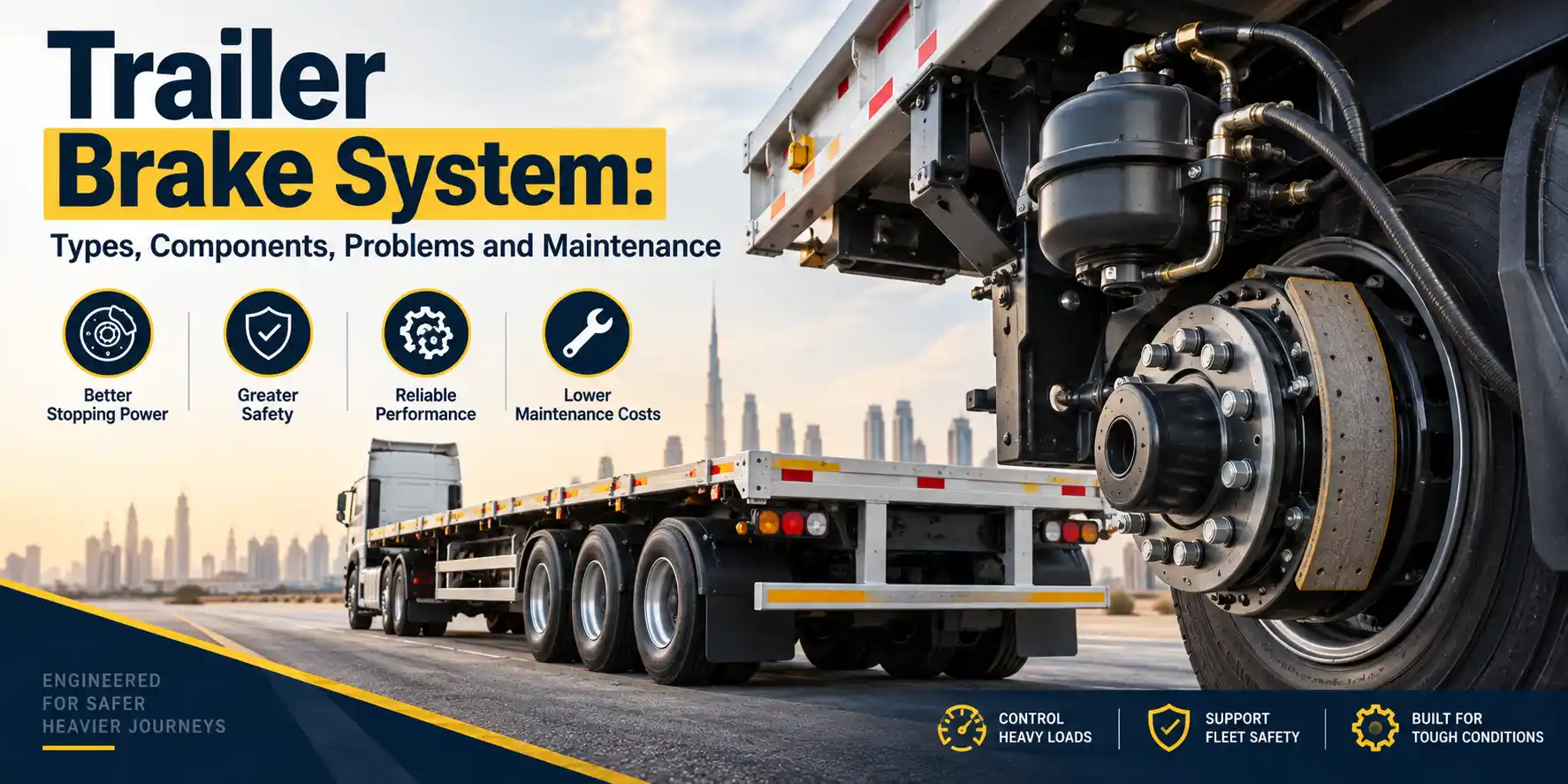
Trailer Brake System: Types, Components, Problems and Maintenance
A trailer brake system controls how a trailer slows down and stops while carrying cargo. It must work with the towing vehicle, axles, tyres, suspension, and load distribution to provide controlled braking. For commercial fleets, selecting the right braking arrangement is an important part of trailer design, especially when trailers operate with heavy or changing loads.
The correct system depends on trailer type, axle configuration, operating weight, towing vehicle, route conditions, and applicable safety requirements. Electric, hydraulic, surge, and air braking systems use different methods to transfer braking force. Understanding these differences helps fleet managers and transport operators specify equipment more accurately and identify problems before they affect daily operations.
What Is a Trailer Brake System?
A trailer brake system is the group of components that applies braking force to a trailer’s wheels. Depending on the design, the system can use electrical signals, hydraulic pressure, compressed air, or mechanical movement to operate the brakes.
Braking reduces the force required from the towing vehicle and helps keep the trailer under control during deceleration. It becomes especially important when a trailer carries heavy cargo, travels long distances, or operates on routes that require frequent speed changes.
The braking arrangement should be considered together with the trailer’s axle ratings, tyre capacity, suspension, chassis, and intended payload.
How Does a Trailer Brake System Work?
The basic process starts when the driver applies the vehicle brakes. A control signal or pressure then reaches the trailer braking components. The brake mechanism converts that input into friction at the wheel, slowing the trailer.
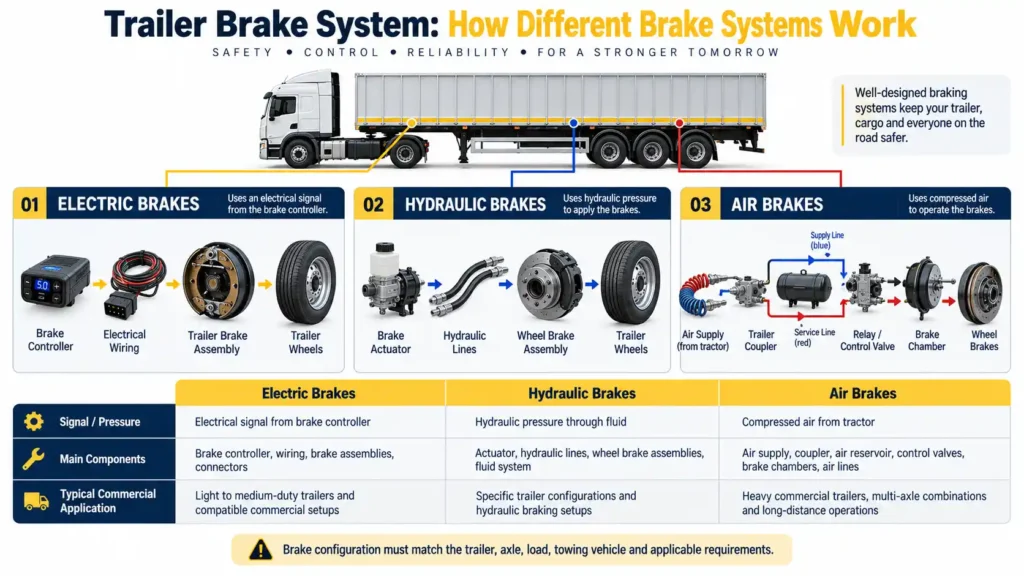
The exact process differs by brake type. Electric systems send a controlled electrical signal to brake assemblies. Hydraulic systems use fluid pressure to operate wheel brakes. Air systems use compressed air and pneumatic components to apply braking force across commercial vehicle combinations.
A properly specified system also needs balanced braking across the trailer. Uneven braking can increase tyre wear, reduce stability, and make the trailer harder to control. This is why brake components, axle configuration, load distribution, and control equipment need to work as one system.
Main Types of Trailer Braking Systems
Electric Trailer Brakes
An electric trailer brake system uses an electrical signal from a brake controller to activate brake assemblies at the trailer wheels. The controller determines how much braking force is requested and sends that signal through the trailer wiring.
Electric brakes are commonly associated with trailers where the towing vehicle provides an electronic brake-control signal. The system requires suitable wiring, reliable connections, correctly adjusted brake assemblies, and a compatible controller.
Electrical faults can affect braking performance even when the mechanical brake components are in good condition. Damaged cables, poor connections, corrosion, or controller problems should therefore be included in routine inspections.
Hydraulic Trailer Brakes
Hydraulic braking uses fluid pressure to transfer force from an actuator or master-cylinder arrangement to the wheel brakes. The pressure travels through hydraulic lines and operates the brake mechanism.
Hydraulic systems require attention to fluid condition, hoses, fittings, seals, and possible leaks. They can be suitable for trailer configurations where hydraulic braking is specified as part of the complete vehicle combination.
Air Brake Systems
Air braking uses compressed air to operate brake chambers and related pneumatic components. It is widely associated with heavy commercial vehicles and trailer combinations.
An air system can include an air reservoir, valves, hoses, brake chambers, control components, and other pneumatic equipment. Air pressure must be maintained within the required operating range, and leaks or damaged components can reduce braking performance.
For commercial fleets, air brakes should be considered as part of the complete tractor and trailer braking architecture rather than as an isolated trailer component.
Surge and Mechanical Brakes
Some trailer designs use surge or mechanical arrangements. Surge systems use trailer movement during deceleration to create braking force through an actuator. Mechanical systems transfer force through physical linkages.
These arrangements can be suitable for specific trailer applications, but their suitability depends on the trailer design, load, towing vehicle, and operating conditions.
Key Trailer Brake System Components
A commercial braking arrangement can contain several connected components. Electric systems may include a controller, wiring, connectors, brake magnets, and brake assemblies. Hydraulic systems can include an actuator, fluid lines, fittings, and wheel brake components.
Air systems typically use pneumatic lines, reservoirs, valves, brake chambers, and wheel-end brake assemblies. Commercial configurations may also include ABS components and other control equipment.
The breakaway system is another important safety component on applicable trailer designs. It is intended to activate trailer braking if the trailer becomes separated from the towing vehicle. Its battery, switch, cable, wiring, and brake connection should be inspected according to the trailer manufacturer’s requirements.
For a trailer designed around container transport, braking must also be considered alongside the cargo arrangement. A Skeleton Trailer may carry different container configurations, so axle loading and brake specification should be matched to the intended operating configuration.
Choosing Brakes for Commercial Trailer Applications
Brake selection should start with the trailer’s intended work rather than a generic preference for one technology. Fleet operators should identify expected payload, axle count, cargo type, loading frequency, route profile, towing vehicle, and operating environment.
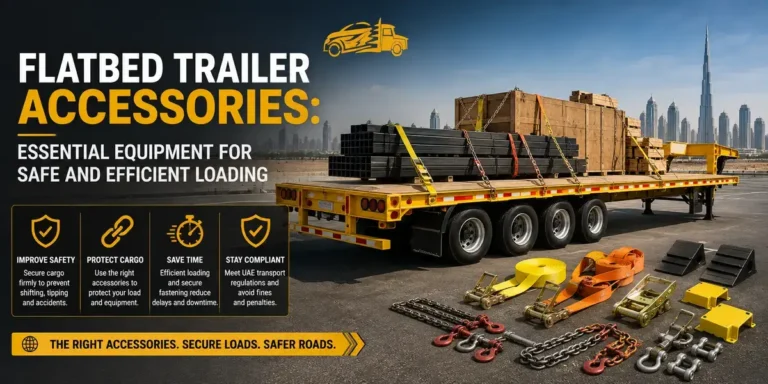
A Flatbed Trailer carrying varied industrial cargo may have different braking requirements from a trailer designed for a fixed type of load. Likewise, a low-bed used for heavy equipment needs a braking configuration appropriate for its operating weight and axle arrangement.
Frequent loading and unloading, heavy aggregate, construction materials, and uneven operating surfaces can place demanding conditions on braking components. A Tipper Trailer should therefore be specified as a complete combination of chassis, axles, suspension, tyres, and brakes.
Trailer Braking for Heavy Loads
Heavy cargo changes how much braking force is required and how that force is distributed. The trailer’s gross weight, axle loading, centre of gravity, and cargo position all affect braking behaviour.
Overloading an axle or placing cargo incorrectly can create uneven wheel loads. This can contribute to unstable braking, accelerated component wear, and reduced tyre performance.
Fleet managers should also consider the duty cycle. A trailer making repeated short trips may experience different brake temperatures and wear patterns from one travelling long distances with high payloads. Route gradients, traffic conditions, road surfaces, and stop frequency can also influence maintenance needs.
Common Trailer Brake System Problems
Brake problems can develop gradually or appear as sudden faults. Common issues include worn brake components, damaged hoses, air leaks, hydraulic leaks, electrical connection problems, incorrect adjustment, and uneven braking.
Reduced braking performance should never be ignored. A trailer that pulls to one side, produces unusual noise, overheats a wheel end, or shows abnormal tyre wear may require inspection.
For air systems, pressure loss or damaged pneumatic lines can affect operation. For hydraulic systems, fluid leaks and damaged hoses can reduce pressure. For electric systems, wiring faults, corrosion, poor grounding, or controller problems can interfere with the braking signal.
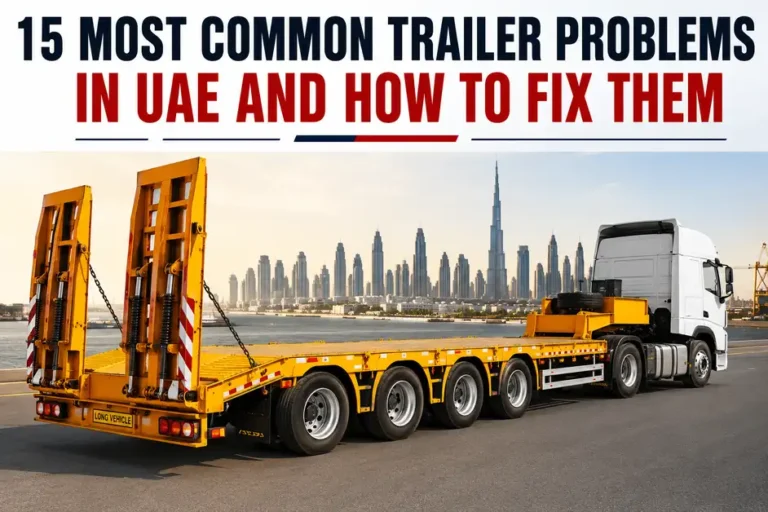
A Low Bed Trailer used for heavy equipment should receive particular attention to brake condition because its operating loads and duty cycle can be demanding. Inspection intervals should follow the manufacturer’s recommendations and the requirements applicable to the vehicle.
Trailer Brake Maintenance
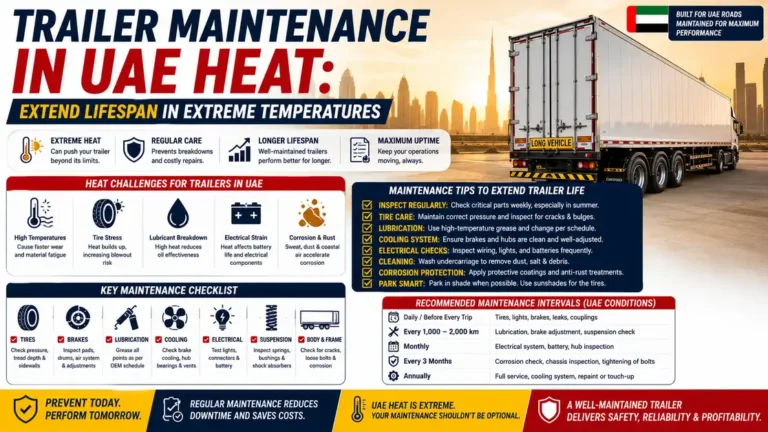
Preventive maintenance helps identify small faults before they become operational problems. Inspection should cover brake assemblies, hoses, lines, connections, fasteners, tyres, and related control components.
Air-brake trailers should be checked for pressure loss, damaged hoses, loose connections, and other pneumatic faults. Hydraulic systems require inspection for leaks, damaged lines, fluid issues, and worn components. Electric systems need checks of wiring, connectors, controller operation, and brake response.
Wheel-end components should also be inspected for wear and abnormal heat. Any component outside its specified condition should be repaired or replaced using suitable parts and procedures.
Maintenance records can help fleet operators identify recurring faults. Tracking inspections, repairs, component replacement, and operating conditions can reveal patterns that may otherwise be missed.
Trailer Brake Systems in UAE Fleet Operations
UAE commercial trailers can operate across industrial areas, highways, construction sites, ports, and logistics routes. These environments can expose braking components to heat, dust, heavy loads, frequent stops, and long operating cycles.
Brake specification should therefore be considered during trailer procurement, not only after the trailer enters service. Operators should confirm that the braking configuration matches the trailer’s intended payload, axle arrangement, towing vehicle, and applicable requirements.
Working with an experienced Trailer manufacturer can help fleet buyers consider braking as part of the complete trailer specification. The manufacturer can assess the relationship between braking, axles, suspension, tyres, chassis construction, and intended application.
How to Improve Trailer Brake Reliability
The first step is correct specification. A braking system designed for the actual operating conditions is easier to maintain and less likely to be exposed to unsuitable loads.
The second step is consistent inspection. Drivers and maintenance teams should report changes in braking response, unusual sounds, visible damage, air-pressure issues, leaks, or electrical faults as soon as they appear.
The third step is correct loading. Cargo should be positioned according to the trailer’s design and within applicable axle and weight limits. Good load distribution supports more predictable braking behaviour.
Finally, replacement components should match the approved trailer configuration. Mixing incompatible components can change braking response and create avoidable maintenance issues.
Frequently Asked Questions
Can a trailer use more than one braking technology?
A trailer combination can contain different control and braking technologies depending on its design. The complete system must be engineered so the components work together correctly.
Does trailer axle count affect brake selection?
Yes. Axle count changes how load is distributed across the trailer. Brake and axle specifications should therefore be considered together with the intended payload and operating conditions.
Can brake problems affect trailer stability?
Yes. Uneven or inadequate braking can influence how a trailer behaves during deceleration. Correct load distribution, suitable braking components, and proper maintenance help support controlled operation.
How often should trailer brakes be inspected?
Inspection frequency depends on trailer type, usage, operating environment, manufacturer recommendations, and applicable requirements. High-use commercial trailers may need more frequent checks than lightly used equipment.
Should brake specifications be decided before trailer manufacturing?
Yes. Brake requirements should be established during trailer design because they interact with axles, suspension, wheels, tyres, chassis construction, and the towing vehicle.