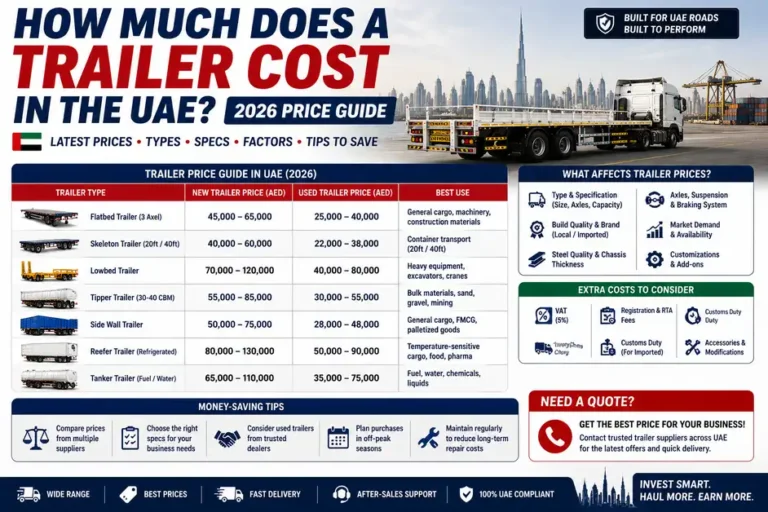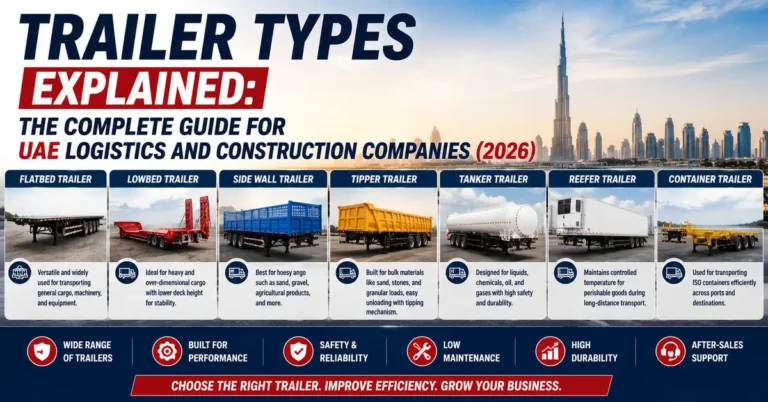
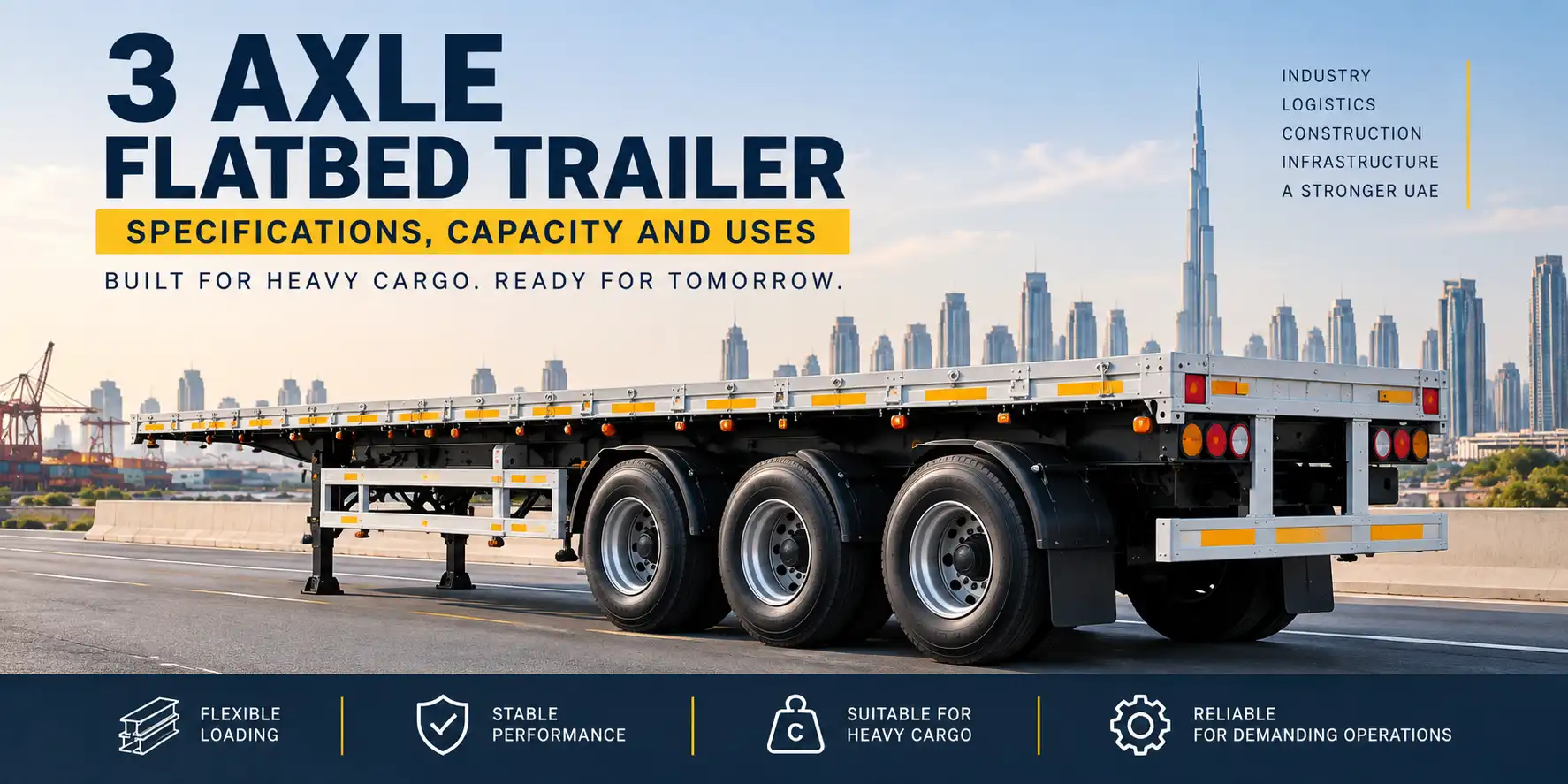
3 Axle Flatbed Trailer: Specifications, Capacity and Uses
A 3 axle flatbed trailer uses three axle positions beneath an open cargo platform. This arrangement is common where operators need to spread cargo weight across several axle groups while retaining the loading flexibility of an open deck.
Unlike an enclosed trailer, a flatbed allows cargo to be loaded from the rear, sides, or above with lifting equipment. That makes it useful for steel sections, machinery, fabricated structures, construction materials, pipes, and other loads with unusual shapes.
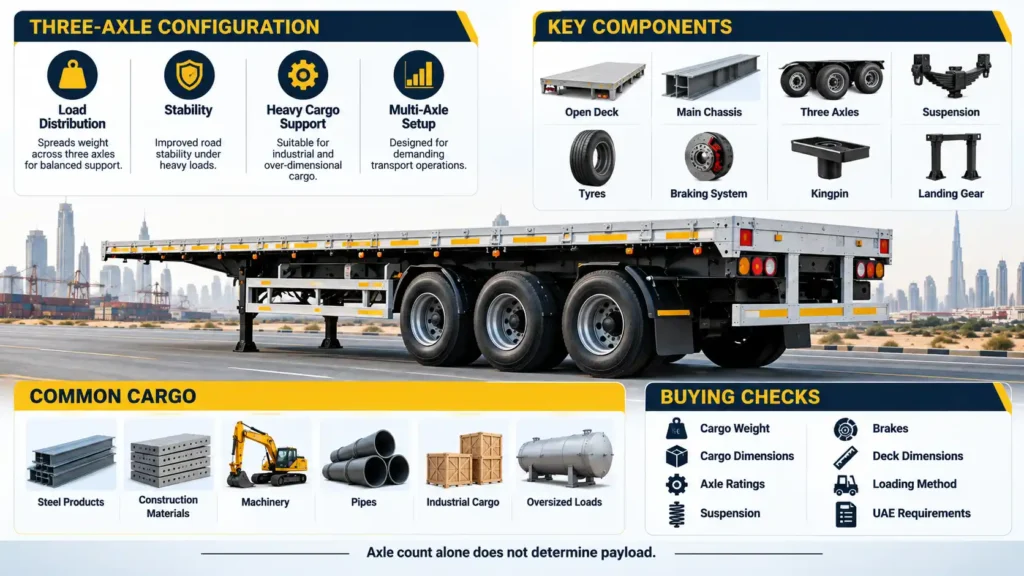
The number of axles, however, does not determine capacity by itself. Chassis construction, axle ratings, suspension, tyres, brakes, kingpin, cargo position, and applicable weight limits all influence the usable load.
Why Use Three Axles on a Flatbed Trailer?
Adding a third axle creates another load-bearing position beneath the chassis. This can help distribute weight across the running gear when the trailer is designed for that configuration.
For fleet operators, the benefit is not simply having an additional axle. The complete running gear needs to work together. A highly rated axle cannot compensate for a chassis, tyre, suspension, or brake system that is not suited to the intended operating load.
Golden Space’s existing axle guide explains this relationship in greater detail, particularly the difference between axle rating and actual payload. You can review the Trailer Axle Capacity guide when comparing different axle arrangements.
Load Distribution Across Three Axles
Cargo placement remains important even with three axles. A concentrated load placed too far forward or rearward can place excessive force on a particular axle group or the tractor coupling.
The deck should therefore be considered as a loading area with defined limits rather than an empty surface where cargo can be positioned anywhere. Heavy or dense items require greater planning than evenly distributed palliated freight.
Stability Under Load
Three axle arrangements can provide several contact points between the trailer and road. This can support a more balanced running configuration when the load, suspension, tyres, and chassis are correctly matched.
Stability still depends on the centre of gravity and cargo position. A tall or uneven load can affect handling regardless of how many axles are fitted.
3 Axle Flatbed Trailer Specifications to Check
A buyer should review the complete specification rather than focus on axle count. Important details include overall dimensions, deck construction, axle ratings, suspension, tyres, brakes, kingpin arrangement, landing gear, lighting, and cargo securing provisions.
The deck length should be selected according to the cargo being transported. Standard lengths may suit common freight, while specialized industrial loads can require a different platform arrangement.
Golden Space currently offers flatbed configurations with standard and custom lengths, so the correct dimensions should be established from the actual cargo requirement rather than selected from a generic size chart.
Deck Construction
The deck needs enough structural strength for the intended cargo and loading method. Steel sections, machinery, pipes, and fabricated components can create concentrated loads that differ greatly from evenly distributed freight.
The location and design of cross-members also matter. They transfer forces between the deck and main chassis members and contribute to the trailer’s structural behavior.
Axles and Suspension
Axle ratings should correspond with the expected operating load. Suspension also needs to match the trailer’s duty cycle, road conditions, cargo characteristics, and axle arrangement.
Spring and air suspension can have different characteristics, so the choice should be made as part of the complete trailer specification rather than treated as an isolated upgrade.
Braking Equipment
Brakes need to be suitable for the loaded tractor-trailer combination. A three-axle arrangement can place substantial demands on braking components during repeated or heavy-duty operation.
The braking configuration should therefore be considered alongside axle ratings, tyres, suspension, and the towing vehicle. The Trailer Brake System guide provides a separate explanation of electric, hydraulic, and air braking arrangements.
3 Axle 40 Ft Flatbed Trailer
A 40-foot platform can be useful for operators handling long industrial cargo or specific container-related transport requirements. However, the phrase “40 ft” describes platform length, not the complete trailer specification.
Before selecting a 40-foot configuration, buyers should check deck width, deck height, tare weight, axle arrangement, suspension, braking equipment, kingpin position, and permitted operating weight.
Cargo dimensions should also be measured before ordering. A load that technically fits the deck may still create problems if it extends beyond approved limits or interferes with the tractor, axle group, securing equipment, or loading machinery.
For this reason, a 40-foot three-axle configuration should be specified around the cargo and operating route rather than selected solely because the length is widely available.
How Much Weight Can It Carry?
A 3 axle flatbed trailer does not automatically have a 50-ton payload. This distinction is important because advertised figures can refer to different measurements, including gross weight, axle rating, or maximum design capacity.
A 50 ton trailer specification may exist for a particular manufacturer and configuration, but that figure cannot be transferred to every three-axle design.
The usable payload depends on the trailer’s tare weight and the lowest applicable limit among its structural, axle, tyre, suspension, coupling, and legal ratings. The tractor-trailer combination also needs to remain within the applicable operating limits.
This is why fleet buyers should request a complete technical specification instead of choosing equipment from a single capacity number.
What Can a 3 Axle Flatbed Trailer Carry?
The open platform makes this trailer suitable for cargo that benefits from unrestricted loading access. Common applications can include:
- Structural steel
- Pipes and long fabricated sections
- Construction materials
- Industrial equipment
- Machinery
- Precast components
- Metal products
- Packaged industrial cargo
- Oversized items that cannot fit inside an enclosed body
The cargo type should influence the deck arrangement and securing provisions. Long steel products may need different support and restraint arrangements from machinery or palletized goods.
Golden Space lists construction, oil and gas, logistics, steel distribution, and industrial transport among the applications for its flatbed range.
Three Axles vs Other Flatbed Configurations
A two-axle arrangement may suit applications with lower operating loads or different weight requirements. Moving to three axles can distribute the load across another axle position, but it also adds running gear, tyres, brakes, suspension components, and maintenance requirements.
A four-axle configuration may be selected where the intended operating conditions require another level of load distribution. The decision should not be based on axle count alone.
For a fleet, the better approach is to start with cargo weight and dimensions, then work through axle loading, chassis requirements, suspension, tyres, brakes, and applicable road restrictions.
Loading a Three-Axle Flatbed Correctly
Cargo should be positioned so that the axle groups, kingpin, and tractor remain within their approved loads. Heavy items should not simply be placed wherever there is available deck space.
Long cargo can also create unusual load points. A steel beam, for example, may concentrate significant weight at specific sections rather than distribute it evenly across the platform.
The cargo must also be secured according to its characteristics. Chains, straps, binders, blocking, or other restraint equipment should be selected for the load rather than used simply because they are available.
Golden Space’s Trailer Weight Distribution guide covers the relationship between cargo position, axle loading, and trailer stability in greater detail.
Buying a 3 Axle Flatbed Trailer in UAE
UAE buyers should begin with the job the trailer needs to perform. A logistics operator moving general industrial cargo may have different requirements from a contractor transporting steel structures or heavy machinery.
Before requesting a quotation, prepare the expected cargo weight, dimensions, loading method, trip frequency, route type, and tractor details. This gives the manufacturer enough information to recommend a suitable configuration.
The trailer should also be assessed as a complete unit. Check the chassis, axles, suspension, tyres, brakes, coupling, deck, lighting, and securing provisions rather than comparing prices using axle count alone.
Common Selection Mistakes
One mistake is assuming that three axles automatically mean higher payload. Another is comparing trailers only by deck length while overlooking tare weight, axle ratings, suspension, tyres, or braking equipment.
Choosing a configuration from another manufacturer’s specification is another risk. Two trailers may both have three axles but have very different chassis designs, component ratings, and intended duties.
Buyers should also avoid selecting the trailer before confirming the tractor. Fifth-wheel height, coupling arrangement, tractor axle limits, and overall combination requirements can influence the final specification.
Final Considerations for Fleet Buyers
A 3 axle flatbed trailer is best selected from the cargo outward. Start with the material being transported, its dimensions, weight, loading method, and expected operating frequency.
From there, determine the suitable deck arrangement and running gear. Axles, suspension, tyres, brakes, chassis, coupling equipment, and securing provisions should form one coordinated specification.
For UAE fleets, the operating environment and applicable road requirements should also be considered before the build is finalized. A properly specified trailer is easier to integrate into daily transport work and gives fleet operators a clearer basis for maintenance, loading, and future use.
Frequently Asked Questions
Is a three-axle flatbed suitable for machinery?
It can be suitable for machinery when the trailer’s structural, axle, suspension, tyre, and braking ratings match the machine’s weight and dimensions. Loading access and securing requirements should also be considered.
Does a longer deck mean a higher payload?
No. Deck length provides more cargo space, but it does not establish payload capacity. Structural ratings, axle groups, tare weight, tyres, suspension, and applicable limits determine how much weight can actually be carried.
Can a three-axle flatbed transport containers?
Some flatbed configurations can be designed for container-related applications, but container compatibility depends on the trailer’s locking points, dimensions, ratings, and intended configuration. A dedicated skeleton trailer may be more appropriate for regular container work.
What information should I provide when requesting a trailer quotation?
Provide cargo weight, dimensions, loading method, expected operating frequency, tractor details, route requirements, and any special securing needs. This allows the manufacturer to develop a more suitable specification.
Does axle count affect trailer maintenance?
Yes. More axle assemblies introduce additional tyres, brakes, bearings, suspension components, and inspection points. Maintenance requirements therefore depend on the complete running gear and how frequently the trailer operates under load.