Flatbed Trailer Sizes: The Ultimate Guide to Flatbed Trailers in Dubai
Choosing the wrong trailer size can cost you time, money, and serious logistical headaches. If you’re operating in Dubai or anywhere across the UAE, understanding flatbed trailer sizes before you buy or rent is not something you want to skip. Whether you’re transporting steel, construction equipment, or oversized industrial goods, the dimensions and specs of your trailer directly affect what you can legally and safely carry. This guide covers everything you need to know, from standard sizes and weight limits to real-world applications and what to look for when sourcing a flatbed trailer in Dubai.
What Is a Flatbed Trailer and Why Does It Matter
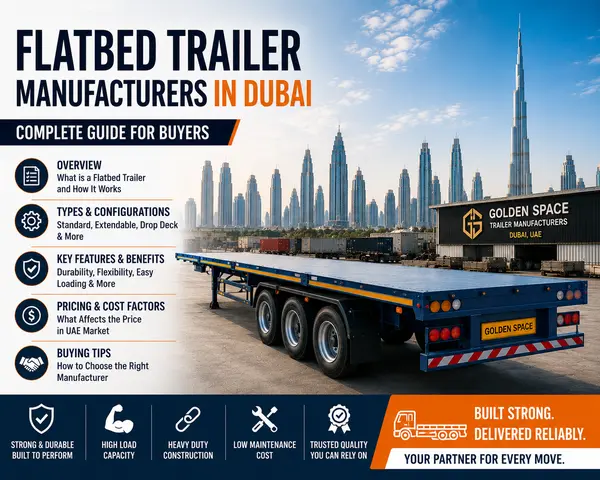
A flatbed trailer is an open-deck trailer with no sides or roof. That open design is exactly what makes it so useful. You can load cargo from the sides, top, or rear, which gives you flexibility that enclosed trailers simply don’t offer.
They’re a go-to choice for construction companies, oil and gas operators, steel suppliers, and logistics firms across the UAE. The lack of walls makes loading with cranes and forklifts straightforward, and securing cargo with chains or straps is easy on a flat surface.
Getting the right size matters more than most buyers initially expect. A trailer that’s too small creates safety risks. One that’s too large adds unnecessary weight and fuel costs. Knowing your flatbed trailer dimensions before committing to a purchase or rental saves you from both problems.
Standard Flatbed Trailer Sizes and Dimensions
Flatbed trailers come in a range of sizes depending on the cargo type and transport regulations in the region. In the UAE, both international and locally adapted sizes are available in the market.
Common Length Options
The most widely used flatbed trailer measurements by length include:
- 20 feet – Compact and easy to maneuver in tight urban areas. Common for lighter construction loads.
- 40 feet – The standard workhorse. Most logistics and construction companies in Dubai rely on this size.
- 45 feet – Less common but used when extra deck length is needed without going into lowbed territory.
- 48 to 53 feet – Larger options available for long-haul and heavy-duty applications.
When people ask how long is a flatbed trailer, the honest answer is that it depends on the application. For most commercial use in Dubai, 40 feet is the default choice.
Width and Height Specifications
Standard flatbed trailer sizes with dimensions across the UAE typically follow these measurements:
| Dimension | Standard Measurement |
| Deck Length | 20 ft to 53 ft |
| Deck Width | 2.4 m to 2.55 m |
| Deck Height from Ground | 1.2 m to 1.5 m |
| Legal Load Height (UAE) | Up to 4.2 m total |
| Kingpin to Rear Axle | Varies by configuration |
These figures align with RTA and federal transport authority guidelines in the UAE. Always confirm current regulations before hauling oversized loads, as permits may be required depending on the cargo dimensions.
Flatbed Trailer Specifications You Need to Know
Beyond Flatbed trailer sizes, flatbed trailer specifications cover the structural and mechanical details that determine load capacity and road performance. These specs matter whether you’re buying, renting, or comparing suppliers in Dubai.
Axle Configuration and Weight Capacity
Axle setup directly determines how much weight a flatbed can legally carry. A standard two-axle flatbed handles around 20 to 25 tons of cargo. Triple-axle configurations push that limit higher, often up to 30 to 35 tons depending on the build.
Flatbed truck weight is something buyers often overlook. The tare weight of the trailer itself is subtracted from the gross vehicle weight limit. If your truck and trailer combined weigh 15 tons empty, and the legal GVW limit is 40 tons, your actual payload is 25 tons. Always calculate this before loading.
Deck Material and Surface Type
Most flatbeds in the UAE use either steel or aluminum decking. Steel is more durable and better for heavy industrial loads. Aluminum is lighter, which increases your payload capacity slightly, but it doesn’t handle sharp or heavy point loads as well.
Some trailers come with hardwood decking between steel crossmembers. This is common on trailers used for vehicle transport or cargo that needs a non-slip surface.
Coupling and Landing Gear
The kingpin size is a key part of flatbed trailer specifications. Most trailers use a standard 2-inch kingpin that connects to a fifth wheel on the tractor unit. Check compatibility before purchasing if you’re matching the trailer to a specific fleet of trucks.
Landing gear quality matters too. Cheap landing gear bends or seizes under load, which creates serious problems at delivery sites. Look for heavy-duty manual or power-operated options.
Flatbed Trailer Applications in Dubai and the UAE
Dubai’s economy runs on construction, trade, and logistics. Flatbed trailers sit at the center of all three. Understanding the common flatbed trailer applications in this market helps you choose the right configuration.
Construction sector – Steel rebar, precast concrete panels, I-beams, and heavy plant equipment all move on flatbeds. The 40-foot steel deck flatbed is the standard tool on most large project sites across Dubai, Abu Dhabi, and Sharjah.
Oil and gas industry – Pipes, tanks, drilling equipment, and generators require open-deck transport. Flatbeds are preferred because loading and securing oversized equipment is far easier than with an enclosed trailer.
Port and freight logistics – Around Jebel Ali Port, flatbeds are used to move machinery and goods that don’t fit standard container dimensions. They’re also used to haul container-mounted cargo between port and warehouse.
Vehicle transport – Single-level flatbeds move heavy machinery, forklifts, and excavators to and from job sites regularly. This is different from a car carrier but uses the same open-deck principle.
Infrastructure projects – Road construction, bridge building, and utility installation all involve equipment and material that moves on flatbeds. The UAE’s ongoing mega-projects across all emirates keep this segment active year-round.
Buying or Renting a Flatbed Trailer in Dubai: What to Consider
Whether you’re buying outright or renting short-term, a few key factors should guide your decision when sourcing a flatbed trailer in Dubai.
New vs. Used
New trailers come with full specifications and manufacturer warranties. Brands like Schmitz Cargobull, Krone, and locally assembled options are all available through dealers in Dubai. Prices for new units start from around AED 35,000 and go higher depending on length and spec.
Used trailers offer significant savings. A well-maintained used 40-foot flatbed can cost between AED 15,000 and AED 40,000 depending on age and brand. Inspect the deck, axles, braking system, and all documentation before purchasing.
Key Checks Before Committing
- Confirm the trailer’s mulkiya is valid and clean with no financial liens.
- Check axle and suspension condition, especially on older units.
- Verify the deck surface is flat with no warping or structural cracks.
- Test all lights and braking systems before accepting delivery.
- Make sure the flatbed trailer dimensions match your cargo and route permit requirements.
Rental is a smart option for short-term projects. Many logistics companies in Dubai’s industrial zones offer day, week, and monthly rental arrangements. Always clarify load limits and insurance cover in the rental agreement.
Frequently Asked Questions
What are the standard flatbed trailer sizes used in Dubai?
The most common flatbed trailer sizes used in Dubai are 20-foot and 40-foot trailers. The 40-foot flatbed is the industry standard for most construction and logistics work. Longer options up to 53 feet are available for specialized cargo. Size selection depends on your load type, road permit requirements, and the truck configuration you’re using.
What is the legal load height for a flatbed trailer in UAE?
The total legal load height in the UAE is generally 4.2 meters from ground level. This includes the trailer deck height plus the cargo on top. Loads exceeding this require special permits from the relevant transport authority. Always check current RTA and federal guidelines before hauling tall or oversized cargo on public roads.
How do flatbed trailer specifications affect payload capacity?
Specifications like axle count, deck material, and trailer tare weight all affect how much cargo you can legally carry. A two-axle steel flatbed typically carries 20 to 25 tons of payload. Heavier-spec trailers with three axles can carry more. Subtracting the trailer’s own weight from the gross vehicle weight limit gives your usable payload figure.
What are the most common flatbed trailer applications in the UAE?
Flatbeds are widely used in construction, oil and gas, port logistics, and infrastructure projects. They’re the preferred choice for carrying steel, heavy machinery, pipes, and oversized equipment that can’t fit inside enclosed trailers. Their open deck design makes loading with cranes or forklifts fast and straightforward compared to other trailer types.
How long is a standard flatbed trailer used in commercial transport?
A standard flatbed trailer used in commercial transport is typically 40 feet long. This length works well for most cargo types and fits within standard road permit limits. Shorter 20-foot trailers are used for tighter routes or lighter loads, while longer 48 to 53-foot options suit specialized long-haul requirements across the UAE.
Conclusion
Getting the right flatbed trailer for your operation in Dubai starts with understanding the flat bed trailer sizes, specs, and applications that matter to your specific cargo type. Standard flatbed trailer dimensions range from 20 to 53 feet, with the 40-foot variant being the most practical choice for most commercial operations in the UAE. Whether you’re buying new, purchasing used, or renting for a short-term project, always verify the trailer’s documentation, inspect the structure carefully, and confirm that the flatbed trailer specifications match your load and route requirements. Make informed decisions and your trailer investment will pay off for years to come.