Trailer Maintenance in UAE Heat: Lifespan in Extreme Temperatures
Summer road surface temperatures in the UAE can exceed 60 degrees Celsius. That heat does not just affect drivers, it accelerates wear on every trailer component touching the road.
Many Sharjah industrial fleet operators discover tyre blowouts and brake issues only during peak summer months. This guide explains how trailer maintenance UAE practices change with extreme heat, what to check regularly, and how to extend trailer lifespan despite harsh conditions.
What Heat Related Trailer Maintenance Involves and How It Works
Heat affects trailers in several ways. Tyres lose pressure faster as air expands inside hot rubber. Brake components heat up more quickly during use, increasing the risk of brake fade on long routes.
Metal components expand under high temperatures, which can loosen bolts and fittings over time. Grease and lubricants break down faster in heat, leaving moving parts under protected.
Effective trailer maintenance UAE practices account for these changes. This means adjusting inspection frequency, using heat resistant components, and following stricter lubrication schedules during summer months.
Why Heat Maintenance Matters in 2026
UAE temperatures continue to rise during summer months, with Dubai and Sharjah often recording highs above 45 degrees Celsius. According to the UAE National Center of Meteorology, summer temperatures regularly exceed historical averages in inland areas.
Construction and logistics operations do not pause during summer. Trailers continue hauling heavy loads across hot roads, increasing stress on tyres, brakes, and structural components.
Equipment failures during summer create higher costs. Emergency repairs take longer when demand for parts and service increases across the industry during peak heat months.
Extending trailer lifespan through proper heat maintenance reduces these risks. Fleet operators who follow consistent maintenance schedules avoid costly breakdowns during critical project periods.
Key Maintenance Areas and Benefits
Tyre Care in Hot Climate
Trailer tyre care hot climate practices focus on pressure monitoring and tread inspection. Hot roads cause tyre pressure to rise, while underinflated tyres generate more heat through friction.
Brake System Maintenance
Trailer brake maintenance becomes more important as temperatures rise. Brake fade occurs when brakes overheat from repeated use, reducing stopping power on long hauls.
Lubrication Schedules
A consistent grease lubrication schedule prevents metal components from grinding under heat expansion. Summer months often require more frequent lubrication than winter.
Structural Inspections
Heat causes metal expansion and contraction cycles. Regular inspections catch loose bolts, cracked welds, or stress points before they become major issues.
Seasonal Maintenance Comparison Table
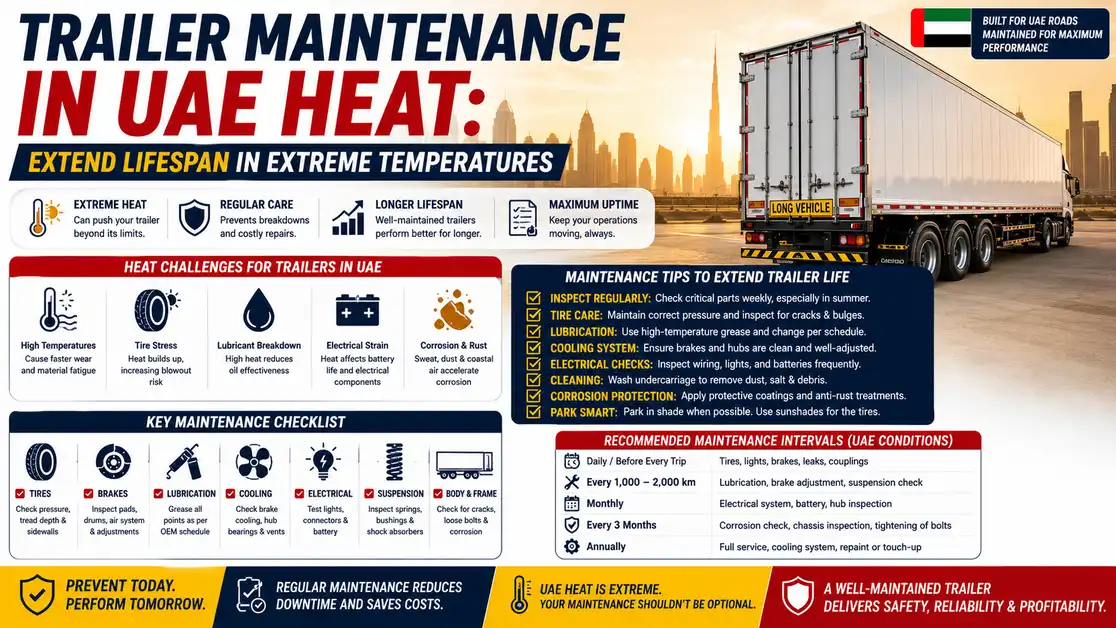
| Maintenance Area | Standard Schedule | UAE Summer Schedule |
| Tyre pressure check | Weekly | Every 2 to 3 days |
| Brake inspection | Monthly | Every 2 weeks |
| Grease lubrication | Monthly | Every 2 to 3 weeks |
| Bolt and weld check | Quarterly | Monthly |
| Tyre tread inspection | Monthly | Every 2 weeks |
Step by Step Maintenance Process for Summer
- Check tyre pressure every 2 to 3 days during peak summer, ideally early morning before roads heat up.
- Inspect tyre tread depth for uneven wear patterns that signal alignment issues.
- Test brake response and listen for unusual sounds indicating brake fade or component wear.
- Apply grease to all moving parts following a shortened lubrication schedule.
- Inspect bolts, welds, and structural joints monthly for signs of heat related stress.
- Park trailers in shaded areas when possible to reduce direct heat exposure on tyres and seals.
- Keep maintenance records to track patterns and predict component replacement needs.
Real World Scenario: Sharjah Fleet Operator
A Sharjah industrial fleet operator managing 15 trailers noticed increased tyre replacements during summer months. Tyres that normally lasted 18 months were failing within 10 to 12 months.
After switching to a shortened tyre pressure check schedule and adding shaded parking areas, tyre lifespan improved noticeably. The operator also moved brake inspections to every two weeks during summer, catching wear issues before they caused brake fade incidents.
This example shows how small schedule adjustments during extreme heat reduce both costs and safety risks.
Common Mistakes to Avoid
Many operators skip tyre pressure checks during summer, assuming standard schedules still apply. Hot roads change tyre pressure faster than cooler conditions, making frequent checks essential.
Ignoring brake fade warning signs is another common issue. Reduced stopping power or unusual heat from brake components signals a problem that needs immediate attention.
Using standard grease without considering heat breakdown rates leads to under lubricated parts. This increases friction and accelerates wear on axles and bearings.
Some operators also delay structural inspections, assuming visual damage would be obvious. Heat related stress often starts internally before becoming visible.
Expert Tips and Best Practices
Schedule tyre pressure checks during early morning hours when roads and tyres are coolest. This gives a more accurate baseline reading before heat affects pressure throughout the day.
Use heat resistant grease formulated for high temperature operations. Standard grease breaks down faster and may not provide adequate protection during peak summer months.
Train drivers to recognize early signs of brake fade, such as a soft brake pedal or reduced stopping power. Early detection prevents more serious brake system damage.
Rotate trailers within your fleet so no single unit faces constant heavy use during the hottest months. This spreads wear more evenly across your equipment.
For fleet operators looking to upgrade aging trailers, our guide on choosing heavy duty flatbed trailers covers build materials that hold up better in UAE heat conditions.
Tools and Resources You Need
Maintaining trailers in UAE heat requires specific tools and tracking systems. Consider these essentials:
- Digital tyre pressure gauges for quick, accurate readings
- Heat resistant grease suited for high temperature operations
- Maintenance log sheets or digital tracking apps for scheduling
- Shaded parking or covered storage areas when available
- Brake inspection tools to check pad wear and temperature
Following manufacturer guidelines for your specific trailer type also helps. Different trailer designs, such as lowbeds versus flatbeds, may have different maintenance priorities based on axle configuration and load patterns.
Frequently Asked Questions
Q: How often should I check trailer tyre pressure in UAE summer?
During peak summer heat, check tyre pressure every 2 to 3 days, ideally in the early morning. Hot roads cause pressure to rise quickly, so frequent checks help avoid blowouts.
Q: What causes brake fade in hot climates?
Brake fade happens when repeated braking generates heat faster than the system can dissipate it. This reduces stopping power and becomes more common during long hauls in UAE summer temperatures.
Q: Does heat affect trailer lubrication needs?
Yes, heat breaks down grease faster than normal conditions. Shortening your lubrication schedule during summer months helps protect axles, bearings, and other moving parts.
Q: Can extreme heat damage trailer structural components?
Extreme heat causes metal expansion and contraction, which can loosen bolts and stress welded joints over time. Regular structural inspections catch these issues early.
Q: How can I extend trailer lifespan in UAE conditions?
Following a shortened summer maintenance schedule for tyres, brakes, and lubrication helps significantly. Parking in shaded areas and rotating trailer usage across your fleet also reduces wear.
Conclusion
Trailer maintenance UAE practices must adapt to extreme summer heat. Frequent tyre pressure checks, shorter brake inspection intervals, and heat resistant lubrication all play a role in protecting your fleet.
Avoiding common mistakes like skipping tyre checks or ignoring brake fade signs helps prevent costly breakdowns. Following the seasonal schedule outlined here can extend trailer lifespan even under harsh UAE conditions.
For fleet operators considering new equipment built for UAE climate demands, explore our complete trailer range to find options designed for long term durability.
For further reference on UAE weather patterns affecting equipment maintenance, consult the National Center of Meteorology UAE and the Roads and Transport Authority Dubai for vehicle safety guidelines.