Tipper Trailer for Tractor: Compatibility, Capacity and Applications
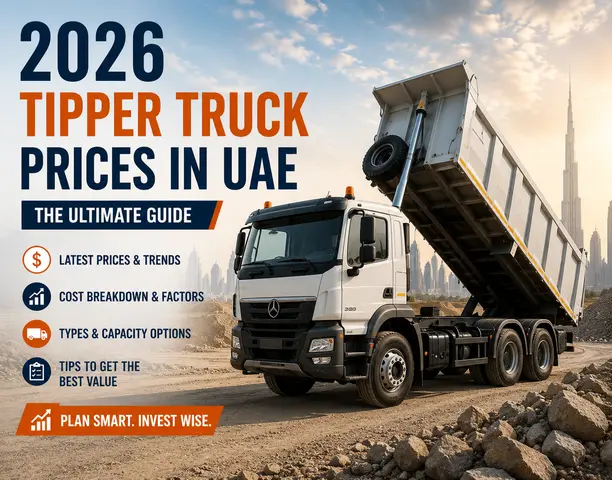
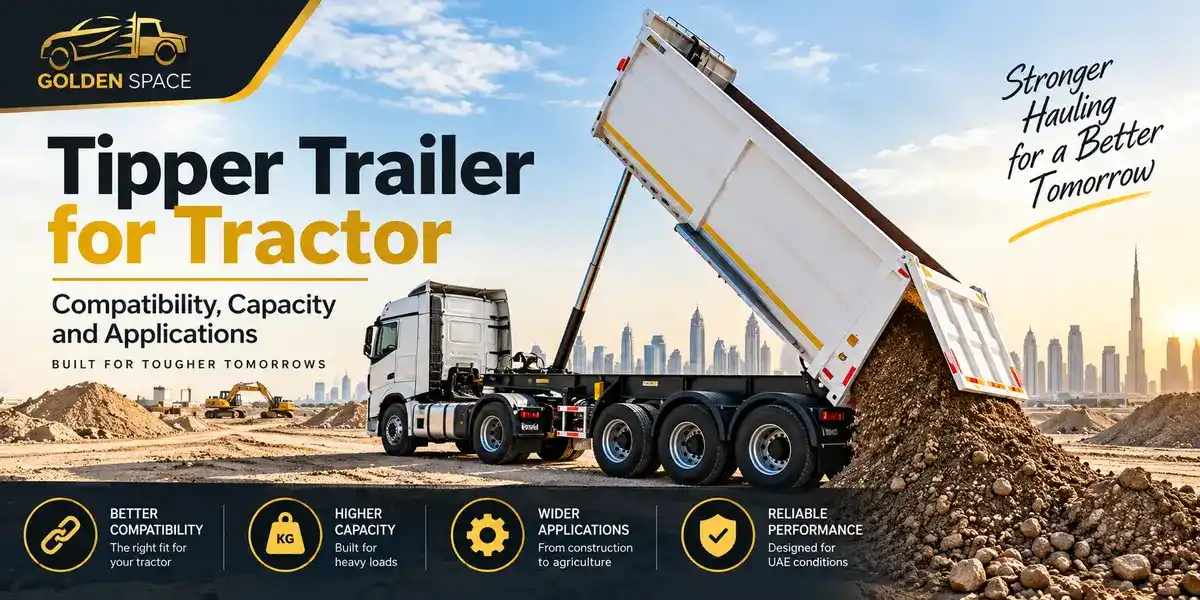
A tipper trailer for tractor carries loose materials and unloads them through a tipping mechanism. The body rises, allowing gravity to move material toward the discharge point. This makes tipper trailers useful for construction, quarrying, agriculture, land development, and bulk material transport.
The term tractor can refer to different towing vehicles. Agricultural tractors usually pull trailers through drawbar or hitch connections. Road tractor units commonly use fifth-wheel connections with semi-trailers.
This difference matters when selecting equipment. A trailer must match the tractor’s connection, braking system, hydraulic requirements, weight capability, and intended workload. Businesses comparing commercial configurations can review the Tipper Trailer range before deciding on a suitable setup.
What Is a Tipper Trailer for Tractor?
A tipper trailer is built around a body that can be raised during unloading. Hydraulic force lifts the front of the body while gravity moves loose cargo toward the rear. The system reduces manual unloading for applications where repeated discharge is required.
Agricultural tipper trailers are generally smaller than commercial semi-tippers. They may carry soil, crops, fertilizer, feed, or landscaping materials around farms and smaller worksites. Heavy commercial tipper trailers are designed for larger loads and road-based operations.
The right choice depends on the tractor and the work. Buyers should establish the towing vehicle, cargo type, expected load, and unloading method before selecting the trailer.
How Does a Tipper Trailer Work?
Hydraulic Tipping Mechanism
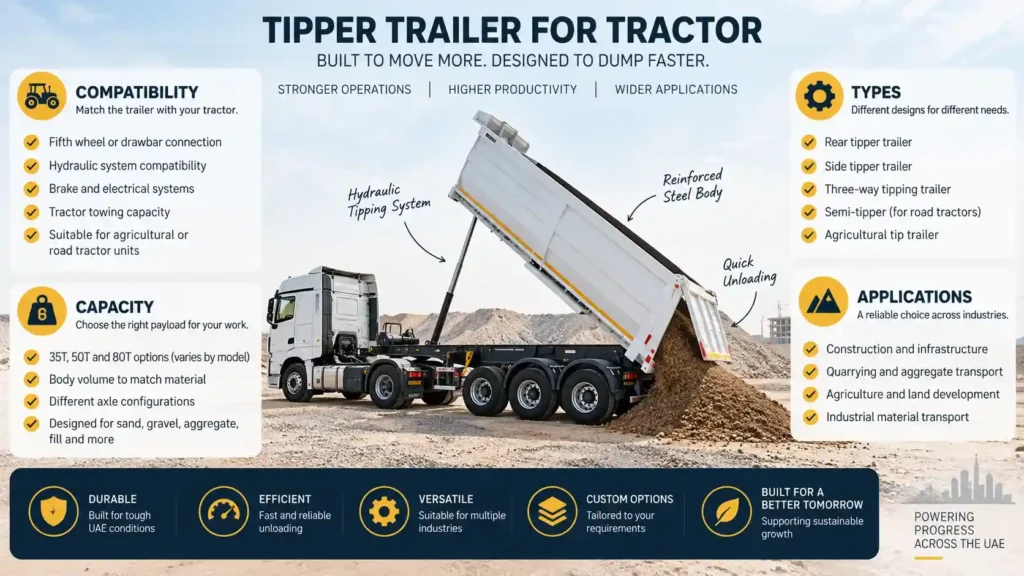
The hydraulic system supplies the force needed to raise the trailer body. A hydraulic cylinder pushes the front of the body upward while the rear acts as the discharge end. The exact hydraulic arrangement varies between trailer designs.
The tractor may provide hydraulic power for certain trailer configurations. Other systems can use a dedicated hydraulic arrangement. Compatibility should therefore be confirmed before the trailer is ordered.
Loading and Unloading Process
Loading starts with placing material evenly inside the body. The operator should avoid creating an unnecessary concentration of weight in one area. Correct distribution supports stable operation and helps control axle loading.
Before tipping, the vehicle should be positioned on suitable ground with enough clearance. The operator then activates the hydraulic system and raises the body according to the manufacturer’s procedure. After unloading, the body should return completely to its travel position before departure.
Golden Space states that its hydraulic tipping system can unload in under two minutes. Actual unloading time can vary with material, conditions, and operating procedure.
Tipper Trailer and Tractor Compatibility
Compatibility involves more than matching the trailer’s physical connection. The tractor must provide the required support for coupling, braking, hydraulics, electrics, and loaded weight. Each element should be checked before the final configuration is approved.
Kingpin and Fifth-Wheel Compatibility
Commercial road tractor units generally connect to semi-trailers through a fifth wheel and kingpin. These components must match the tractor and trailer configuration. Fifth-wheel position can also influence trailer height and load distribution.
An agricultural tractor normally uses a different connection arrangement. Buyers should therefore avoid treating a commercial semi-tipper and farm tipper as interchangeable products.
Hydraulic Compatibility
A tipping trailer needs a suitable hydraulic power source. Pressure, flow, connection type, and control arrangement should match the selected system. The tractor must provide the required hydraulic support where the trailer design depends on it.
This should be confirmed during specification. A hydraulic mismatch can prevent the tipping system from operating correctly. It is easier to resolve this requirement before production.
Brake and Electrical Compatibility
The tractor and trailer also need compatible braking and electrical systems. Lighting connections, brake controls, and related equipment should match the complete vehicle combination. The final configuration should be checked before regular operation.
These requirements become more important for heavy commercial fleets. Different tractor models may use different equipment or connection arrangements. Fleet managers should therefore confirm compatibility for each intended combination.
Tipper Trailer Capacity
Capacity depends on more than the body size. The trailer’s approved payload, empty weight, axle configuration, suspension, tyres, and tractor capability all affect the usable load. Material density can also determine how quickly the payload limit is reached.
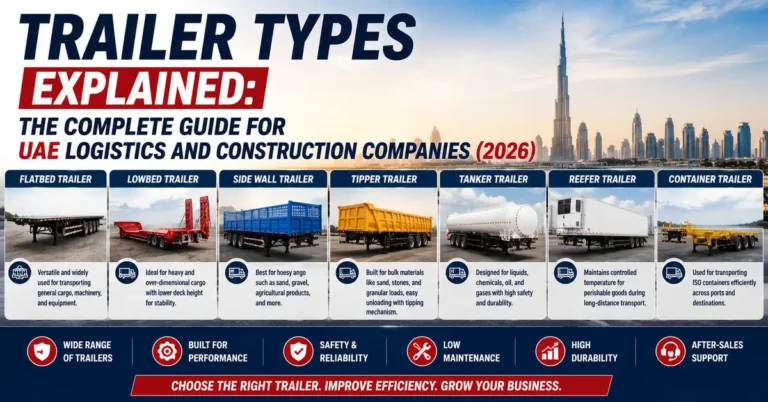
Golden Space currently lists 35T, 50T, and 80T payload options for its tipper range. It also lists BP 16-ton and Bogie 32-ton axle options for different configurations. These ratings apply to specific configurations and should not be treated as universal industry limits.
A large body can be useful for lighter materials but may reach the permitted weight before it is full. Dense aggregate can create the opposite problem. Buyers should consider both weight and volume when choosing capacity.
Tipper Trailer Specifications to Check
A practical specification review should include these points:
- Payload rating
- Body volume
- Overall dimensions
- Axle configuration
- Suspension
- Hydraulic system
- Braking system
- Tyre specification
- Coupling arrangement
- Tractor compatibility
Each specification affects a different part of the operation. The objective is not to choose the largest available rating. It is to create a balanced combination for the actual cargo and route.
Golden Space states that its tipper trailers use reinforced steel bodies and are designed for materials including sand, gravel, aggregate, quarry material, fill, and construction debris.
Tipper Trailer Applications
Construction and Infrastructure
Construction projects often require repeated movement of sand, fill, aggregate, and debris. A hydraulic tipper allows these materials to be discharged quickly at suitable locations. This can support repeated delivery cycles across project sites.
Quarrying and Aggregate Transport
Quarry operations involve heavy materials that can place significant demands on the trailer body and running gear. Body construction should suit the material being carried. Payload and axle configuration should also match the intended routes.
Agriculture and Land Development
Agricultural operations can use tipping trailers for soil, crops, fertilizer, and other materials. Smaller tractor-mounted configurations are generally more suitable for farm work. The trailer should match the tractor’s towing and braking capability.
Industrial Material Transport
Industrial projects may move bulk materials between yards, plants, and work locations. The required configuration depends on the material, payload, route, and unloading method. Frequent tipping operations can also influence hydraulic and maintenance requirements.
Tipper Trailer for Compact Tractor
A tipper trailer for compact tractor is usually designed for lighter applications. Compact tractors have lower towing capacity than heavy commercial tractor units. Their hitch, braking, and hydraulic systems can also differ.
A suitable compact-tractor trailer should be sized around the tractor’s actual capability. Overmatching a small tractor with an oversized trailer can create unnecessary operational problems. Buyers should check the trailer’s empty weight, payload, hitch, and braking requirements.
For farming or landscaping work, maneuverability can also be important. A smaller body may provide better access around narrow field roads or confined worksites. The trailer should still provide enough capacity for normal loads.
Tipper Trailer vs Road Semi-Tipper
A road semi-tipper is designed to operate with a highway tractor unit. It uses a fifth-wheel connection and is generally intended for commercial transport. Its systems need to work with the towing tractor and applicable road requirements.
An agricultural tip trailer is more closely matched to a farm tractor. It often uses a drawbar connection and operates in fields, farms, or smaller sites. Its design and capacity can be very different from a commercial semi-trailer.
Understanding this difference prevents incorrect comparisons. A buyer searching for a tip trailer should first identify the type of tractor being used.
Tipper Trailer Price and Buying Options
What Affects Tipper Trailer Price?
The tipper trailer for tractor price depends on the selected configuration. Payload rating, body dimensions, axle arrangement, suspension, hydraulic equipment, brakes, materials, and customization can all affect cost.
A standard trailer may cost less than a configuration built around unusual cargo or operating requirements. Price comparisons are therefore more useful when specifications are matched. The cheapest option is not always the most suitable for frequent commercial work.
New vs Used Tipper Trailer
A used tipper trailer for tractor can have a lower initial purchase cost. Buyers should inspect the chassis, body, hydraulics, axles, suspension, brakes, tyres, and coupling equipment. Previous repairs and maintenance history should also be considered.
Actual empty weight and approved ratings should be confirmed from available documentation. A used trailer should not be selected from price alone. Future repair needs can change its overall value.
Tipper Trailer for Tractor in the UAE
UAE tipper trailers are commonly associated with construction, quarrying, aggregate supply, land development, and industrial projects. These applications can involve high temperatures, dust, uneven access roads, and frequent loading cycles. Trailer selection should reflect those operating conditions.
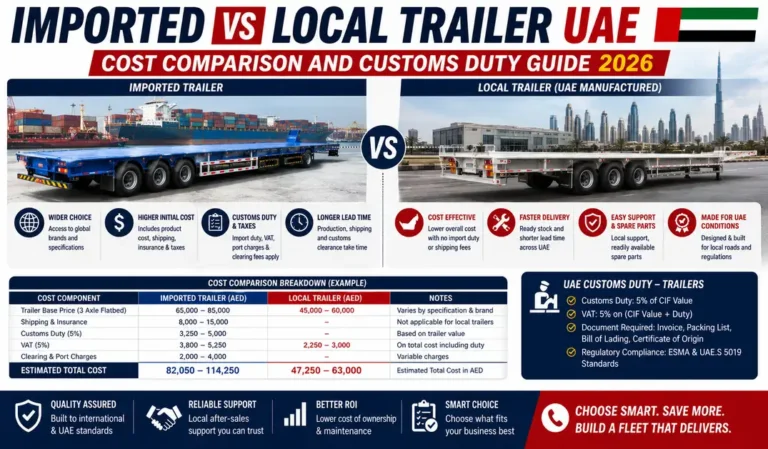
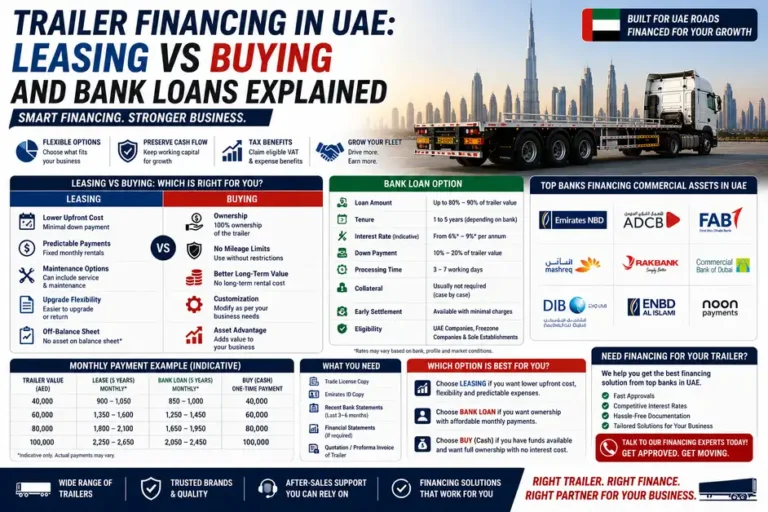
Golden Space manufactures tipper trailers at its Al Sajaa Industrial Area facility in Sharjah. Its availble range is designed for UAE and GCC bulk-haulage applications and includes several payload configurations.
Businesses evaluating local production can also review Trailer Manufacturer in Sharjah when discussing custom configurations. Local requirements can then be considered alongside cargo, tractor, payload, and route conditions.
UAE heavy-vehicle requirements also need attention before deployment. Federal legislation establishes limits covering heavy-vehicle weights and axle loading. Operators should verify the rules applying to their exact vehicle combination before road use.
How to Choose the Right Tipper Trailer
Start with the tractor that will tow the trailer. Confirm the connection type, towing capacity, braking system, electrical setup, and hydraulic requirements. This establishes the basic compatibility requirements.
Next, identify the cargo and typical load weight. Consider material density, body volume, unloading location, and loading frequency. These factors help determine the required trailer capacity.
Then compare axle configuration, suspension, body construction, hydraulic equipment, and dimensions. Each component should support the same operating purpose. A balanced specification is more useful than simply choosing the highest available payload.
For businesses reviewing different commercial trailer options, Trailer manufacturer in UAE provides a starting point for standard and custom configurations. Golden Space states that it manufactures trailers in-house for UAE and GCC operations.
What to Check Before Buying a Tipper Trailer
Before purchasing, confirm the trailer’s approved technical information. Pay particular attention to:
- Payload and empty weight
- Body dimensions and volume
- Axle and suspension configuration
- Hydraulic requirements
- Braking and electrical systems
- Tractor coupling compatibility
- Intended cargo
- Route and operating conditions
The final specification should come from the manufacturer. Generic figures from unrelated models can create incorrect expectations. This is especially important when comparing new, used, rental, and custom trailers.
When Custom Tipper Trailer Design Makes Sense
Custom manufacturing can be useful when standard trailers do not match the cargo or tractor. Body length, payload, axle arrangement, and hydraulic requirements may need adjustment. The operating route can also influence the final specification.
Golden Space states that its tipper range supports custom payload capacities, body lengths, and configurations. These requirements should be discussed during engineering rather than after production begins.
A custom design should solve a specific operational need. The objective is to avoid unnecessary equipment while ensuring the trailer performs its intended work. This approach can also make fleet planning more consistent.
Final Considerations for Tipper Trailer Selection
A suitable tipper trailer for tractor should match the towing vehicle, cargo, unloading method, and operating environment. Payload is important, but it is only one part of the decision. Coupling, hydraulics, brakes, axles, suspension, and legal limits also need consideration.
Agricultural tractors and commercial road tractors require different trailer configurations. Identifying the tractor type first can prevent unsuitable comparisons. Businesses should then select the trailer around their normal cargo and operating cycle.
For UAE fleets, local conditions and applicable transport requirements should form part of the specification process. A carefully matched trailer can support efficient bulk handling without relying on unnecessary capacity.
Frequently Asked Questions
Can a compact tractor tow the same tipping trailer as a road tractor?
No, the two tractor categories generally have different connections and operating capabilities. Compact tractors typically use drawbar arrangements, while road tractors commonly use fifth wheels. Their braking, hydraulic, and weight requirements can also differ.
Does a hydraulic tipping system require a special tractor?
It may require suitable hydraulic equipment from the tractor or another approved power source. The required pressure, flow, and connection depend on the tipping system. Compatibility should be confirmed before selecting the trailer.
Can a tipper trailer be used for materials with different densities?
Yes, but the loading approach may need to change between materials. Dense products can reach the weight limit before the body is full. Lighter materials may use more available volume without reaching the same weight.
What maintenance areas deserve regular attention?
The body, chassis, hydraulic equipment, axles, suspension, brakes, tyres, and coupling should be inspected regularly. Wear can vary with load type and operating conditions. Maintenance intervals should follow the manufacturer’s recommendations.
Can one tractor operate several tipper trailers?
It can when the trailers have compatible coupling, braking, hydraulic, electrical, and weight requirements. Each tractor-trailer combination should be checked before use. Fleet operators should not assume compatibility across every model.