Trailer Fabrication UAE: A Guide to Quality and Innovation
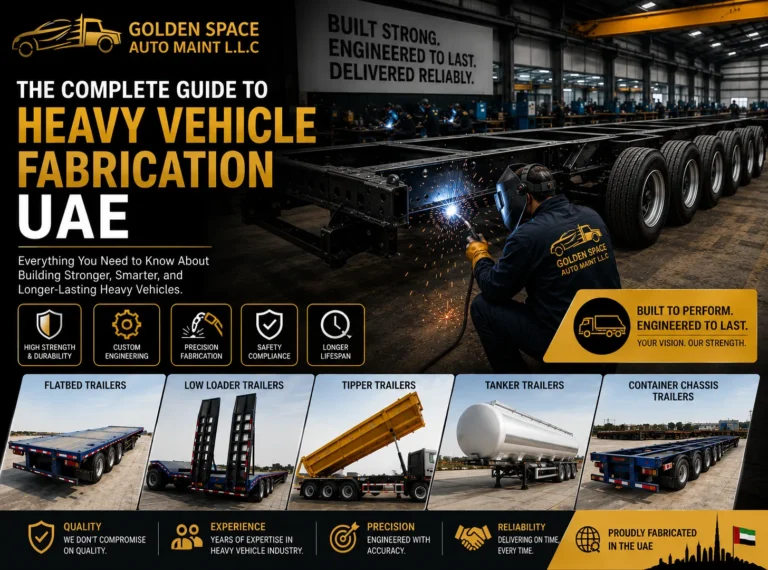
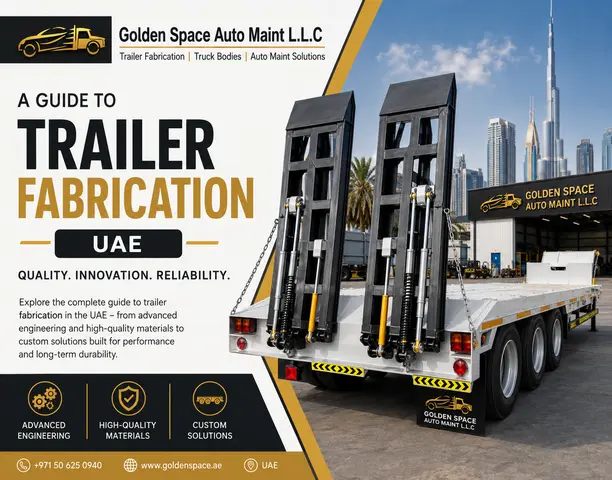
Finding a reliable fabrication partner in the UAE can be the difference between a trailer that lasts a decade and one that fails under pressure within a year. The trailer industry here has grown significantly alongside the country’s construction, logistics, and oil sectors. If you’re sourcing a new trailer, planning a custom build, or simply want to understand what goes into quality trailer fabrication UAE, this guide covers the full picture. You’ll learn about the manufacturing process, key components, what separates good fabricators from poor ones, and how to choose the right partner for your operation.
The State of Trailer Manufacturing in the UAE
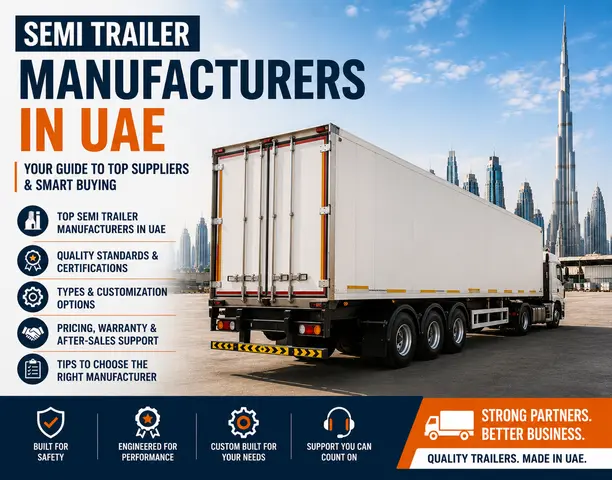
The UAE has developed into a genuine hub for trailer manufacturing across the Middle East. Industrial zones in Dubai, Sharjah, Abu Dhabi, and Ras Al Khaima host dozens of fabrication workshops and full-scale manufacturers supplying trailers across the GCC and beyond.
Demand is driven by the country’s active construction pipeline, port logistics at Jebel Ali, and cross-border freight movement into Saudi Arabia, Oman, and Kuwait. This sustained demand has pushed local manufacturers to raise their standards, invest in better equipment, and develop more specialized product ranges.
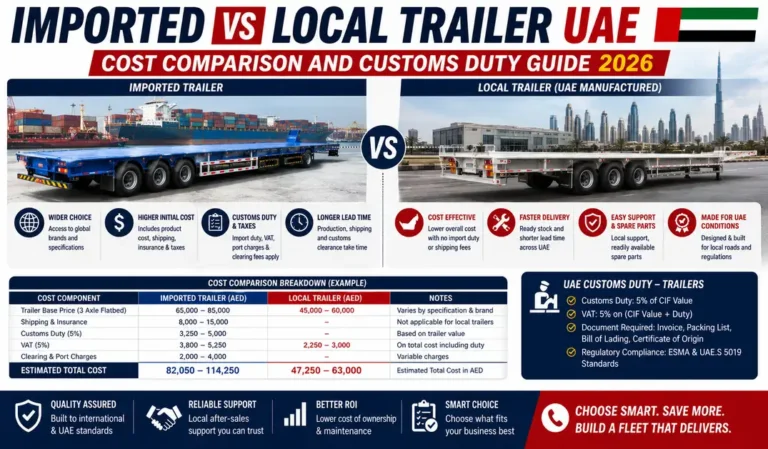
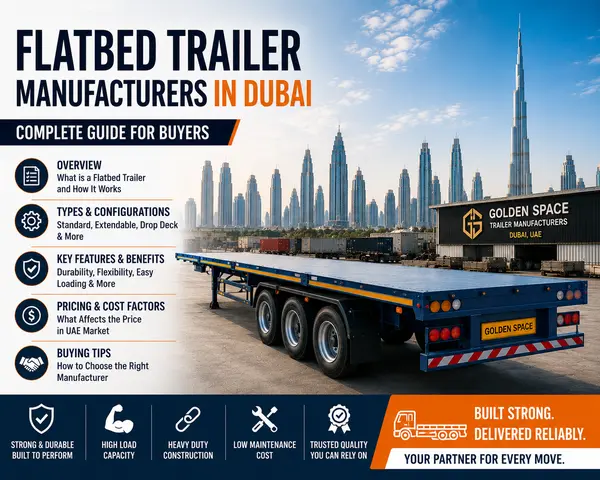
Local fabrication also offers buyers flexibility that imported trailers simply can’t match. You can specify exact dimensions, body material, axle configuration, and added features like toolboxes or ramps. Delivery timelines are shorter and after-sales support is easier to access.
The Trailer Manufacturing Process Explained
Understanding the trailer manufacturing process helps you ask the right questions when evaluating suppliers and spotting shortcuts that affect long-term quality.
Design and Engineering
Every quality trailer starts with proper engineering. Reputable manufacturers in the UAE use CAD software to design chassis frames, calculate load distribution, and verify stress points before cutting a single piece of steel. This step is where dimensions, axle placement, and payload ratings are confirmed.
Cutting corners at the design stage leads to frames that crack under load or axle placements that create handling problems. Always ask a supplier whether they engineer in-house or simply copy existing designs without proper calculation.
Material Selection and Cutting
High-tensile steel is the material of choice for trailer chassis in the UAE market. Grade S355 or equivalent is commonly used for main structural members. Body panels may use mild steel or hardox wear plate depending on the application.
Steel is cut using plasma or laser cutting equipment in well-equipped facilities. Precision at this stage directly affects how cleanly components fit during assembly. Poorly cut components require excessive welding to compensate, which weakens the structure.
Welding and Assembly
Welding is where fabrication quality becomes most visible. Certified welders using MIG or submerged arc welding produce clean, consistent beads that hold under repeated loading cycles. Poor welds crack, corrode, and fail under stress.
The assembly sequence matters too. Chassis rails are aligned and squared before any welding begins. Axle brackets, kingpin plates, and landing gear mounts are positioned to exact tolerances. Rushing this stage creates trailers that pull to one side or wear tyres unevenly.
Surface Treatment and Painting
After structural assembly, trailers go through shot blasting to remove mill scale and surface rust before painting. This step is critical for corrosion resistance, especially given the UAE’s humidity and salt air near coastal areas.
Quality manufacturers apply a two-coat system: an epoxy primer followed by a polyurethane topcoat. This combination handles the heat, dust, and UV exposure typical of UAE operating conditions. Cheaper shops skip the primer or use single-coat paint that peels within a year.
Final Inspection and Compliance
Reputable trailer fabrication UAE operations conduct a final inspection covering all welds, lighting, braking systems, and dimensional accuracy before delivery. Units destined for road use must comply with UAE Federal Transport Authority and RTA standards. Always ask for a compliance certificate and verify the trailer’s chassis number is correctly documented for registration.
Trailer Parts Manufacturer in UAE: What’s Made Locally
A strong network of trailer parts manufacturers in the UAE supports both new builds and maintenance of existing fleets. Knowing what’s available locally saves time and reduces downtime when repairs are needed.
Locally Manufactured Components
Many structural parts are fabricated domestically. These include:
- Chassis rails and crossmembers – Cut and welded to specification by local steel fabricators.
- Body panels and tipping bodies – Fabricated in mild steel or hardox by specialist workshops.
- Toolboxes and storage compartments – Custom built and welded onto the chassis during assembly.
- Ramps and loading accessories – Manufactured to suit specific trailer configurations.
- Kingpin assemblies and landing gear housings – Some fabricated locally, others sourced regionally.
Imported Components Used in Local Builds
Certain parts are still imported due to precision manufacturing requirements:
- Axles – Most trailer axle manufacturers supplying the UAE are based in Europe or China. Brands like BPW, SAF-Holland, and Fuwa are widely used. BPW and SAF-Holland carry a premium but offer proven reliability in heavy-duty applications.
- Air suspension kits – Imported from Europe or Turkey for road-going trailers requiring ride quality and load management.
- Hydraulic cylinders and pumps – Sourced from European or Asian manufacturers depending on the budget tier.
- Braking components – Wabco and Haldex systems are standard on quality builds. Cheaper alternatives exist but carry higher maintenance risk.
Understanding this split between local and imported parts helps buyers evaluate quotes. A very low price usually means compromises on the imported components, which are the ones that determine long-term performance.
Choosing the Right Trailer Fabrication Partner in UAE
Not every workshop calling itself a trailer manufacturer operates to the same standard. Evaluating suppliers carefully before committing protects your investment.
Check certifications and documentation. A professional trailer fabrication UAE operation should hold relevant trade licences and be able to provide documentation for all major components including axles, braking systems, and hydraulic parts. Ask for sample compliance certificates from previous builds.
Visit the facility. A site visit tells you more than any brochure. Look at the welding quality on units currently in production. Check whether the workshop uses proper alignment jigs or relies on manual positioning. Observe how surface treatment is handled and whether there’s a dedicated quality inspection step.
Ask about axle and parts sourcing. Knowing which trailer axle manufacturers they work with tells you a lot about build quality. A fabricator using BPW or SAF-Holland axles is making a different product to one fitting unknown Chinese units with no warranty or UAE parts support.
Review past projects and client references. Established manufacturers in the UAE will have a portfolio of completed trailers across different types, flatbeds, tippers, lowbeds, and skeletal units. Ask for references from buyers who have operated the trailers for at least two years.
Get a detailed specification sheet. Before signing anything, request a full written specification covering steel grades, axle brand and rating, suspension type, paint system, hydraulic components where applicable, and compliance standards. This document protects you if the delivered product differs from what was discussed.
Innovation and Quality Trends in UAE Trailer Manufacturing
The trailer manufacturing sector in the UAE is not standing still. Several trends are shaping how fabricators design and build trailers today.
Weight reduction is a growing priority. Manufacturers are using higher-grade steel in thinner sections to reduce tare weight without sacrificing load capacity. Every kilogram saved in the trailer’s own weight adds directly to legal payload.
Corrosion protection has improved significantly. Hot-dip galvanising is becoming more common on components like landing gear, axle brackets, and hardware. This offers far better long-term protection than paint alone in coastal and humid environments.
Modular design is gaining traction for fleet operators. Standardising axle positions, kingpin heights, and body mounting points makes maintenance and component replacement faster and cheaper across large fleets.
Some manufacturers are also integrating basic telematics mounts and wiring provisions during the build stage, making it easier for fleet operators to add GPS tracking and load monitoring systems without retrofit work.
Frequently Asked Questions
What is involved in the trailer manufacturing process in the UAE?
The trailer manufacturing process covers engineering and design, steel cutting, chassis welding, body assembly, surface treatment, and final compliance inspection. Quality fabricators use CAD design, certified welders, and shot blast plus two-coat paint systems. The process typically takes two to six weeks for a custom build depending on complexity and order volume.
Which trailer axle manufacturers are commonly used in UAE trailer builds?
BPW and SAF-Holland are the most respected trailer axle manufacturers used in quality UAE builds. Fuwa from China is widely used in the budget segment. Axle choice directly affects payload rating, maintenance costs, and parts availability. Always confirm which brand is specified before finalising your order with any trailer fabrication UAE supplier.
What should I look for in a trailer parts manufacturer in UAE?
Look for suppliers who stock components from recognised brands and can provide documentation for what they sell. Check whether they carry axle parts, hydraulic components, braking system spares, and structural steel items. A good trailer parts manufacturer in UAE reduces your downtime significantly by having common items available locally without long import lead times.
How long does custom trailer fabrication in UAE typically take?
Custom trailer fabrication UAE generally takes two to six weeks from order confirmation to delivery. Simple flatbed or tipper bodies at the shorter end. Complex lowbeds or multi-axle configurations take longer. Lead time also depends on material availability and current workshop capacity. Always confirm the timeline in writing before placing an order.
What quality standards should UAE-fabricated trailers meet?
Trailers for road use in the UAE must comply with Federal Transport Authority and RTA standards covering dimensions, axle loads, lighting, and braking systems. Quality fabricators will provide documentation confirming compliance. Ask for a chassis certificate and ensure the trailer is correctly documented for registration to avoid problems during RTA inspection.
Conclusion
Quality trailer fabrication UAE comes down to engineering standards, material choices, skilled welding, and proper finishing. Understanding the trailer manufacturing process helps you ask better questions and spot fabricators who cut corners. Whether you’re sourcing a standard flatbed, a custom tipper body, or a specialised lowbed, the UAE market has manufacturers capable of delivering excellent work. Choose your fabrication partner carefully, verify their parts sourcing including trailer axle manufacturers and key components, and get everything in writing before production begins. A well-built trailer from a reputable UAE manufacturer will serve your fleet reliably for many years.